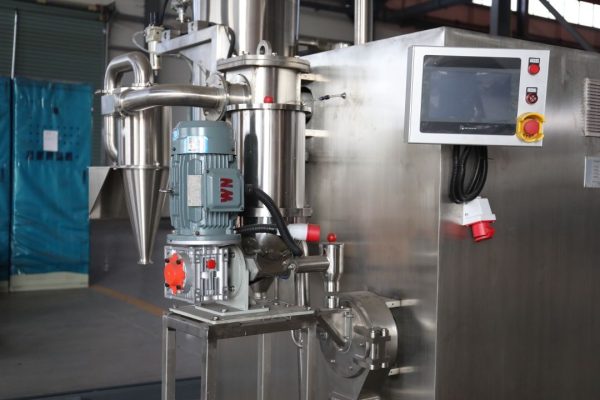
In the powder processing industry, “ultrafine grinding” has become a key technology to improve material performance. As the core equipment for realizing this technology, ultrafine grinders are widely used in minerals, lithium batteries, food, pharmaceuticals, and other fields. Many users wonder before selecting equipment: What exactly is an ultrafine grinder? What is the core principle of its dry ultrafine grinding? Combining JACAN Technology’s 20 years of industry experience, this article will elaborate in detail.
An ultrafine grinder is an intelligent processing equipment capable of refining material particles to the micron level. Different from ordinary grinders, it can achieve more precise particle size control and is suitable for dry processing scenarios—no additional liquid medium is required, and material grinding is completed directly through physical actions. It is especially suitable for materials sensitive to moisture and those requiring purity retention. JACAN Technology’s ultrafine grinders adopt German UPG technology, which can refine materials to micron-level sizes, meeting the high-end processing needs of various industries.
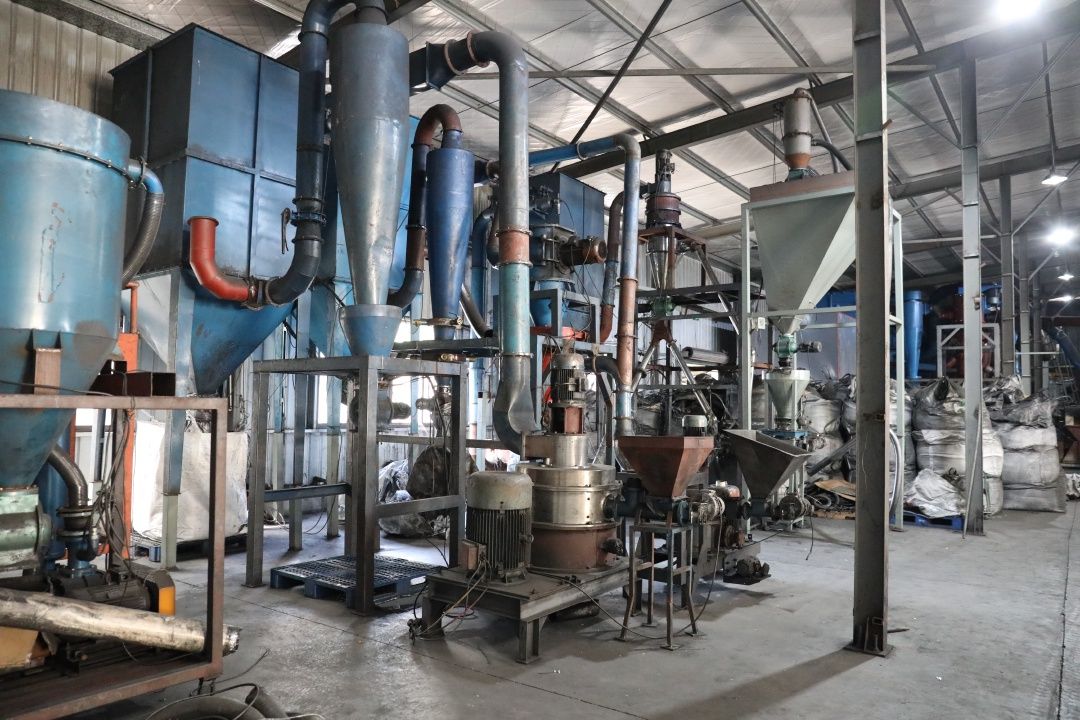
The core principle of dry ultrafine grinding is essentially “particle crushing under the combined action of multiple forces.” During equipment operation, materials are fed into a closed grinding chamber, and the high-speed rotating rotor drives material particles to collide repeatedly with other particles and grinding media. At the same time, the special structure inside the grinding chamber generates extrusion and shearing forces, allowing materials to undergo the multiple effects of “impact-extrusion-shearing” in a limited space and gradually break into the target particle size.
It is worth noting that JACAN’s ultrafine grinders have optimized and upgraded the application of this principle: On one hand, through intelligent regulation of rotor speed, the impact force can be precisely controlled to adapt to materials of different hardness (such as the high hardness of minerals and the low hardness of food). On the other hand, the grinding chamber is seamlessly connected with the classifier, so the crushed materials can directly enter the classification link, avoiding over-grinding or uneven particle size. This is also the key to achieving “efficient and precise processing.”
In addition, the advantages of dry grinding are fully reflected in ultrafine grinders: No subsequent drying process is needed, simplifying the production flow; avoiding contact between materials and liquids to ensure product purity; and a wide range of applications, enabling stable processing of materials from minerals and lithium battery materials to food and pharmaceutical raw materials. Based on this principle, JACAN Technology has developed more than 1,000 material processing solutions, covering chemical industry, cosmetics, pesticides and fertilizers, and other industries, serving more than 1,200 customers cumulatively.
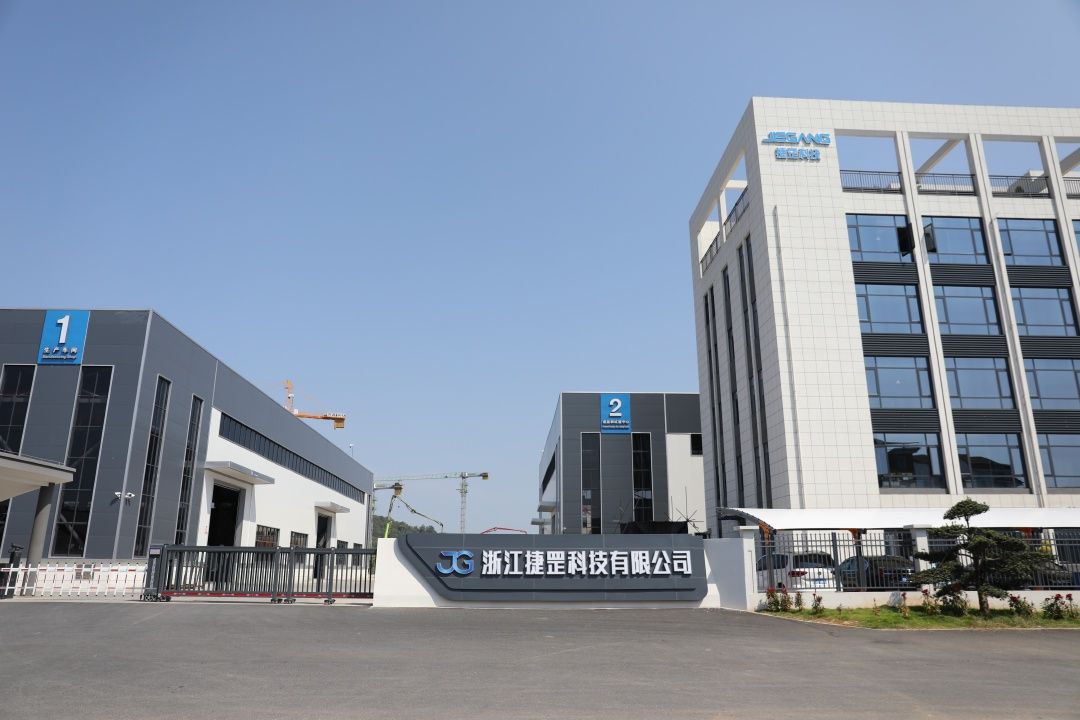
If you are looking for an ultrafine grinding equipment suitable for your materials, you may consider factors such as material hardness, target particle size, and production capacity. JACAN Technology provides customized solutions. A team of more than 150 engineers can optimize the equipment structure according to your specific needs. Moreover, the equipment quality is comparable to that of German and Japanese brands, while the price is only 1/3 of theirs. At the same time, it provides 24/7 after-sales service and on-site installation and training to ensure worry-free use.