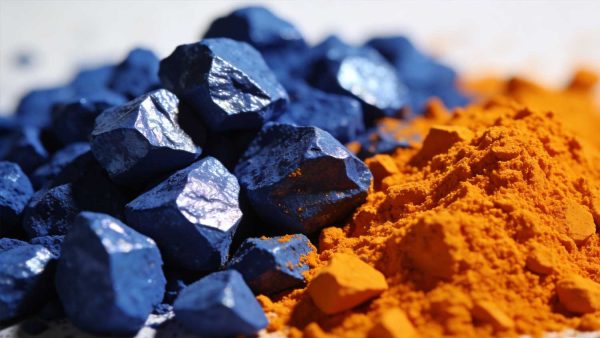
In the coatings, inks, plastics, printing and dyeing, and high-end color paste industries, the particle size and distribution uniformity of organic pigments directly determine tinting strength, transparency, gloss, dispersibility, and storage stability. Traditional grinding processes often suffer from wide particle size distribution, excessive fine powder, residual coarse particles, and poor batch stability. These issues not only affect color matching accuracy but also lead to flocculation, re-coarsening, scratching, and insufficient gloss.
This article focuses on ultrafine grinding of organic pigments and uses actual production cases to explain how professional ultrafine grinding equipment achieves uniform particle size treatment, helping enterprises improve product quality and market competitiveness.
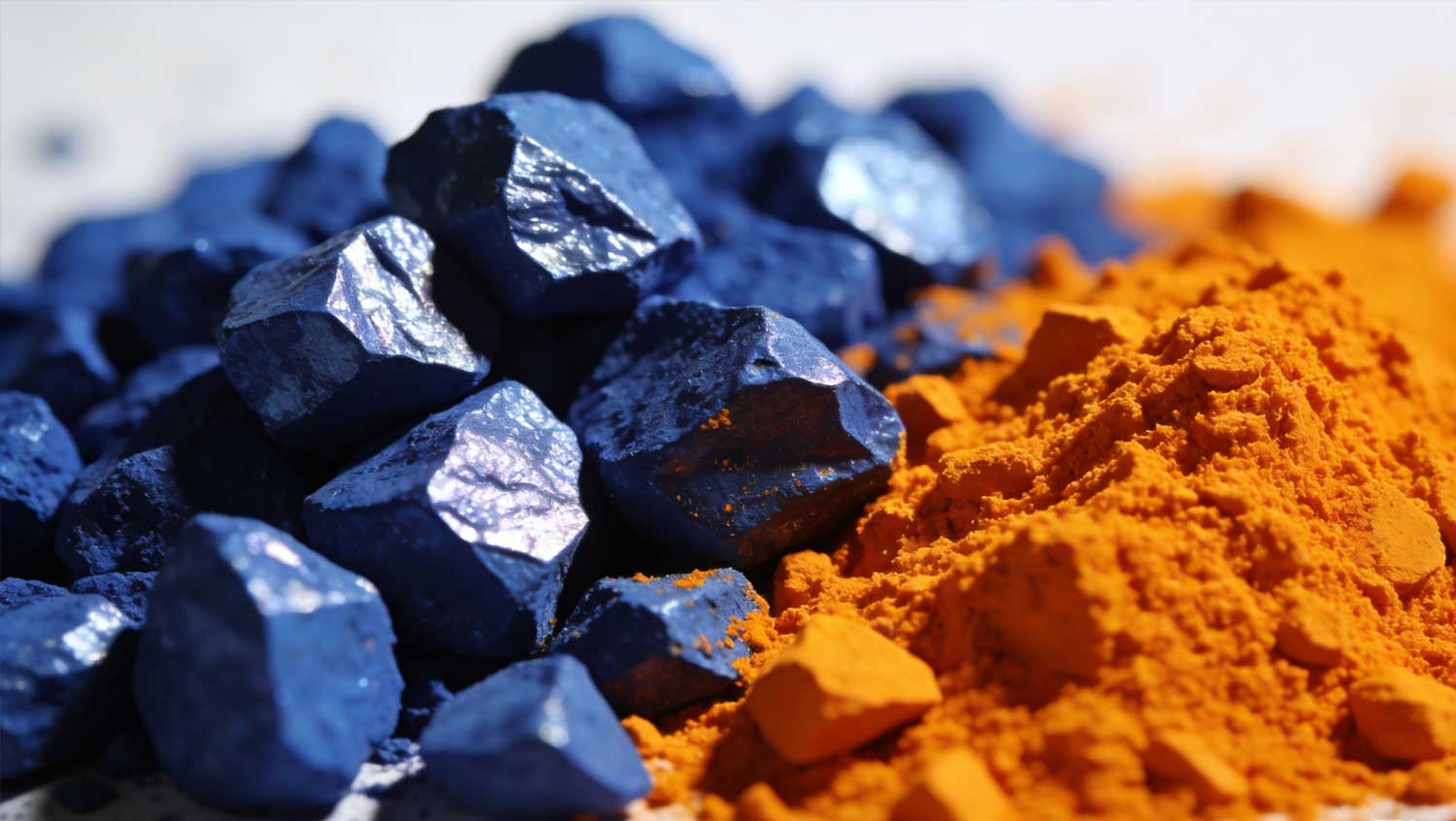
1. Industry Pain Points in Organic Pigment Grinding
- Wide particle size distribution
Coexistence of large particles and fine powder causes unstable tinting strength and large color differences.
- Poor dispersibility
Uneven particles agglomerate easily and are difficult to disperse in resins and solvents.
- Large batch differences
Unstable process parameters lead to inconsistent particle size and increased rework.
- Severe wall adhesion and difficult cleaning
High viscosity and poor flowability result in adhesion, residue, waste, and color mixing.
- Low output and high energy consumption
Multiple cycles reduce efficiency and fail to meet large-scale stable production.
2. Core Principle of Uniform Particle Size via Ultrafine Grinding
JACAN ultrafine grinding systems adopt an integrated design of impact, shear, grinding, and classification to achieve:
- Precise particle size control (typical D50: 1–10μm adjustable)
- Significantly narrowed particle size distribution (reduced SPAN value)
- Avoid over-grinding and agglomeration from excessive fine powder
- Low-temperature, closed-circuit, metal-free operation to ensure purity
The key is:
Grading and grinding work simultaneously. Only qualified particles pass; unqualified ones recirculate.
This is the core technology for highly uniform particle size in organic pigments.
3. Actual Case: Uniform Particle Size Treatment Results
A pigment manufacturer originally used a combination of bead mills and traditional grinders, with problems including:
- Wide particle size distribution and obvious color difference
- Poor dispersion and long mixing time
- Poor batch stability and many customer complaints
After adopting the JACAN special ultrafine grinding and classification line, significant improvements were achieved:
1. Particle Size Control
- Original: unstable D50, many coarse particles
- New process: stable D50, extremely narrow and uniform particle size distribution
- No obvious coarse particles, no excess fine powder, greatly improved flowability
2. Product Performance Improvement
- Tinting strength increased by 10%–25%
- Higher gloss and more stable transparency
- Better dispersibility, shorter paint/ink mixing time
- Improved storage stability, less re-coarsening and flocculation
3. Production Efficiency
- One-pass forming, no repeated grinding
- Continuous production, output increased by over 30%
- Anti-stick inner design, low adhesion, easy cleaning, fast color change
- Dust-free, meeting environmental and safety standards
4. Applicable Organic Pigment Types
- Azo pigments
- Phthalocyanine blue and green
- Quinacridone, benzimidazolone
- Diketopyrrolopyrrole (DPP)
- Perylene, anthraquinone and other high-grade pigments
Especially suitable for high-end inks, automotive coatings, industrial paints, and color masterbatches that demand strict hue, transparency, dispersibility, and uniformity.
5. Core Value of Uniform Particle Size
- Stable hue, reduced color matching rework
- Higher tinting strength, lower pigment cost
- Better dispersibility, improved downstream efficiency
- Enhanced gloss and texture for high-end markets
- Stable mass production and stronger supply capacity
6. Conclusion
For organic pigment manufacturers, ultrafine grinding + precision classification is the most effective and economical way to achieve particle size uniformity. Stable, controllable, repeatable processes fundamentally improve quality and solve long-term pain points such as color difference, poor dispersion, and instability.
Under the trend of high-end, customized, and environmentally friendly development, professional ultrafine grinding equipment has become a key upgrade for pigment enterprises to seize the high-end market.