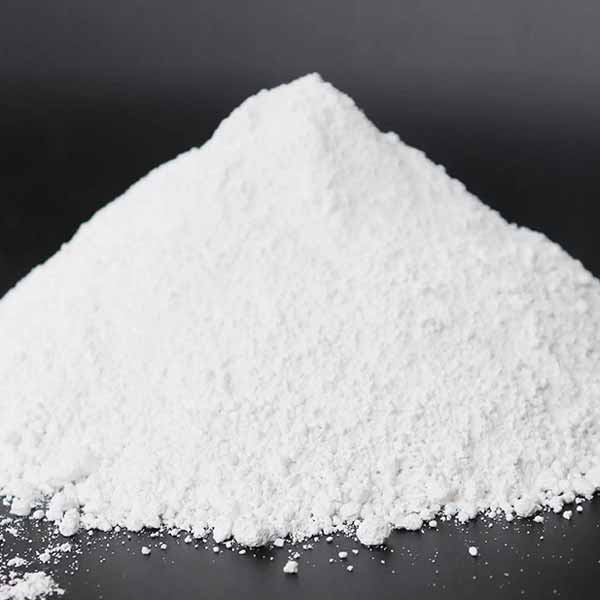
In the powder processing process, “insufficient grinding fineness” is one of the most common problems encountered by ultrafine grinder users—clearly, the equipment parameters indicate it can achieve micron-level processing, but the actual output powder has excessive particle size and uneven particle distribution, directly affecting the quality of downstream products. This issue is not a device failure; it is mostly related to parameter settings, material adaptation, equipment maintenance, and other links. Combining JACAN’s 20 years of equipment R&D and after-sales experience, this article summarizes 3 core adjustment tips to help you quickly solve the problem of insufficient grinding fineness and restore the equipment’s precise processing capability.
1. Precisely Adjust Core Parameters: Optimize Matching Between Rotor Speed and Classification Precision
The grinding effect of an ultrafine grinder depends on the collaborative cooperation between “grinding force” and “classification screening.” An imbalance between these two parameters is the main cause of insufficient grinding fineness. Adjustments can be made in the following directions:
- Adjust Rotor Speed to Enhance Grinding Impact Force: Rotor speed directly determines the impact force exerted on material particles—if the speed is too low, particles cannot obtain sufficient kinetic energy to break, making it difficult to achieve the target particle size. Targeted adjustments should be made based on the hardness of different materials: for low-hardness materials (such as talc and food raw materials), the speed can be adjusted to 1500-2000r/min to avoid over-grinding; for medium-to-high hardness materials (such as quartz sand and spodumene), the speed needs to be increased to 2500-3000r/min to ensure sufficient impact force to crush hard particles. JACAN’s intelligent ultrafine grinders support frequency conversion speed regulation, which can be precisely adjusted through the control panel to adapt to different material requirements.
- Optimize Classifier Parameters to Avoid “Loss of Qualified Powder”: The classifier is key to screening qualified powder. If the classification speed is too high, some unqualified coarse particles will be mistakenly discharged as qualified powder; if the speed is too low, qualified powder will be recycled for re-grinding, which not only affects efficiency but may also cause over-grinding. Adjustment principle: The finer the target particle size, the higher the classification speed should be (e.g., when processing powder below 5μm, the classification speed can be set to 3000-4000r/min); for coarser target particle sizes (e.g., above 10μm), the speed can be appropriately reduced (2000-2500r/min). At the same time, check the blade gap of the classification turbine to ensure there is no blockage or wear, which may affect screening precision.
- Control Feeding Speed to Avoid “Overloading” the Grinding Chamber: Too fast feeding will lead to excessive accumulation of materials in the grinding chamber, preventing the rotor and grinding media from fully contacting and impacting the materials, resulting in “incomplete grinding”; too slow feeding will reduce production efficiency. It is recommended to adjust the feeding speed to a uniform and stable state according to the equipment’s rated capacity (e.g., for equipment with a capacity of 50kg/h, the feeding speed should be controlled at 40-60kg/h). At the same time, use a vibrating feeder to ensure materials enter the grinding chamber at a constant speed, allowing each particle to obtain sufficient grinding time.
2. Adapt to Material Characteristics: Targeted Adjustments to Pretreatment and Process Parameters
Differences in material characteristics such as hardness, humidity, and viscosity directly affect the grinding effect. Ignoring material adaptability, even with reasonable parameter settings, may result in insufficient grinding fineness. The following adjustments are required:
- Material Pretreatment: Control Humidity and Impurities: When material humidity exceeds the standard (usually recommended moisture content ≤3%), particles tend to agglomerate and adhere, making them difficult to crush during grinding; mixing large impurities or foreign objects with excessively high hardness into the material will occupy grinding space and affect the overall grinding effect. Pretreatment measures: Dry high-humidity materials to ensure moisture meets the standard; remove large impurities through screening equipment before grinding to avoid affecting grinding efficiency.
- Adjust Grinding Media to Match Material Hardness: The material and size of the grinding media directly affect the grinding effect—for low-hardness materials (such as food and cosmetic raw materials), ceramic or polymer grinding media can be used to avoid metal contamination; for high-hardness materials (such as minerals and lithium battery materials), high-chromium alloy or cemented carbide grinding media must be selected to enhance grinding force. At the same time, the filling volume of the grinding media should be controlled at 60%-70% of the grinding chamber volume. Too little filling results in insufficient grinding force, while too much affects material flow, both leading to insufficient grinding fineness.
- Handle Viscous Materials: Optimize Grinding Chamber Structure: Viscous materials (such as some chemical raw materials and traditional Chinese medicine extracts) are prone to wall sticking and agglomeration during grinding, requiring adjustments in two aspects: first, install anti-stick liners on the inner wall of the grinding chamber to reduce material adhesion; second, appropriately increase the ventilation volume of the grinding chamber to use air flow to carry away the powder and avoid agglomeration. JACAN’s customized ultrafine grinders can optimize the grinding chamber structure and ventilation system according to material viscosity, effectively solving the problem of insufficient grinding of viscous materials.
3. Equipment Maintenance and Inspection: Eliminate Hidden Problems Such as Wear and Blockage
Hidden problems such as wear of core components and blockage of the grinding chamber in ultrafine grinders are also important reasons for reduced grinding effect, which require regular inspection and adjustment:
- Check Wear of Core Components: Long-term use of components such as grinding hammers, grinding rings, and classification turbines will cause wear, leading to reduced grinding force and screening precision. Regular inspections (recommended every 300 hours) are required: if the wear of the grinding hammer exceeds 5mm, it needs to be replaced in a timely manner; if there are grooves or uneven wear on the inner wall of the grinding ring, it needs to be repaired or replaced; if the blades of the classification turbine are deformed or worn, they need to be calibrated or replaced to ensure classification precision. JACAN provides original accessories supply, which are easy to replace, and the wear resistance of the accessories is 30% higher than the industry average.
- Clean Blockages in the Grinding Chamber and Pipes: After long-term use, material powder may accumulate and block the grinding chamber, feed inlet, discharge pipes, and other parts, affecting material flow and grinding efficiency. It is recommended to shut down and clean once a week: use compressed air to purge the inside of the grinding chamber to remove residual powder; check whether there is caking and blockage at the feed inlet and discharge pipes, and clean them in a timely manner; ensure the ventilation pipeline is unobstructed to avoid powder agglomeration caused by poor air flow.
- Calibrate Equipment Levelness and Sealing: Uneven placement of the equipment will cause uneven force inside the grinding chamber, affecting the uniformity of material grinding; poor sealing will lead to air leakage, reducing grinding force and classification efficiency. Regularly check whether the anchor bolts of the equipment are tightened, adjust the equipment to a horizontal state; check whether the sealing components of the grinding chamber (such as sealing rings and gaskets) are aged or damaged, and replace them in a timely manner to ensure the equipment’s airtightness meets the standard.
If the grinding effect still does not improve after adjusting through the above 3 core tips, it may be that the equipment selection does not match the material requirements (e.g., using a conventional model for high-hardness materials). With 20 years of experience in the ultrafine grinding field, JACAN has a team of more than 150 engineers and over 1,000 material processing solutions. It can provide free material testing and equipment diagnosis services, and optimize adjustment plans or customize exclusive equipment according to your material characteristics, target particle size, and other needs. Its equipment quality is comparable to that of German and Japanese brands, with a price only 1/3 of theirs, and it provides 24/7 after-sales service and on-site technical support to ensure worry-free use.