


Silica powder (ultra-fine quartz powder) is modified mainly to enhance its performance and expand its application scope. Its surface is hydrophilic, resulting in poor compatibility with organic polymer materials. Direct addition tends to cause agglomeration, which impairs the performance of the final materials. After modification, its dispersibility and compatibility are improved, and the bonding force with organic matrices is strengthened, optimizing the mechanical, electrical, and heat-resistant properties of the composite materials. For instance, in plastics, modified silica powder can increase strength, wear resistance, and heat resistance; in coatings, it can enhance adhesion, weather resistance, and corrosion resistance of the film. Additionally, modification can endow silica powder with new functions such as flame retardancy and conductivity, meeting special requirements of different fields. This not only improves product added value but also promotes its application in high-end sectors.

Why is surface modification performed on silica powder (ultra-fine quartz powder)?

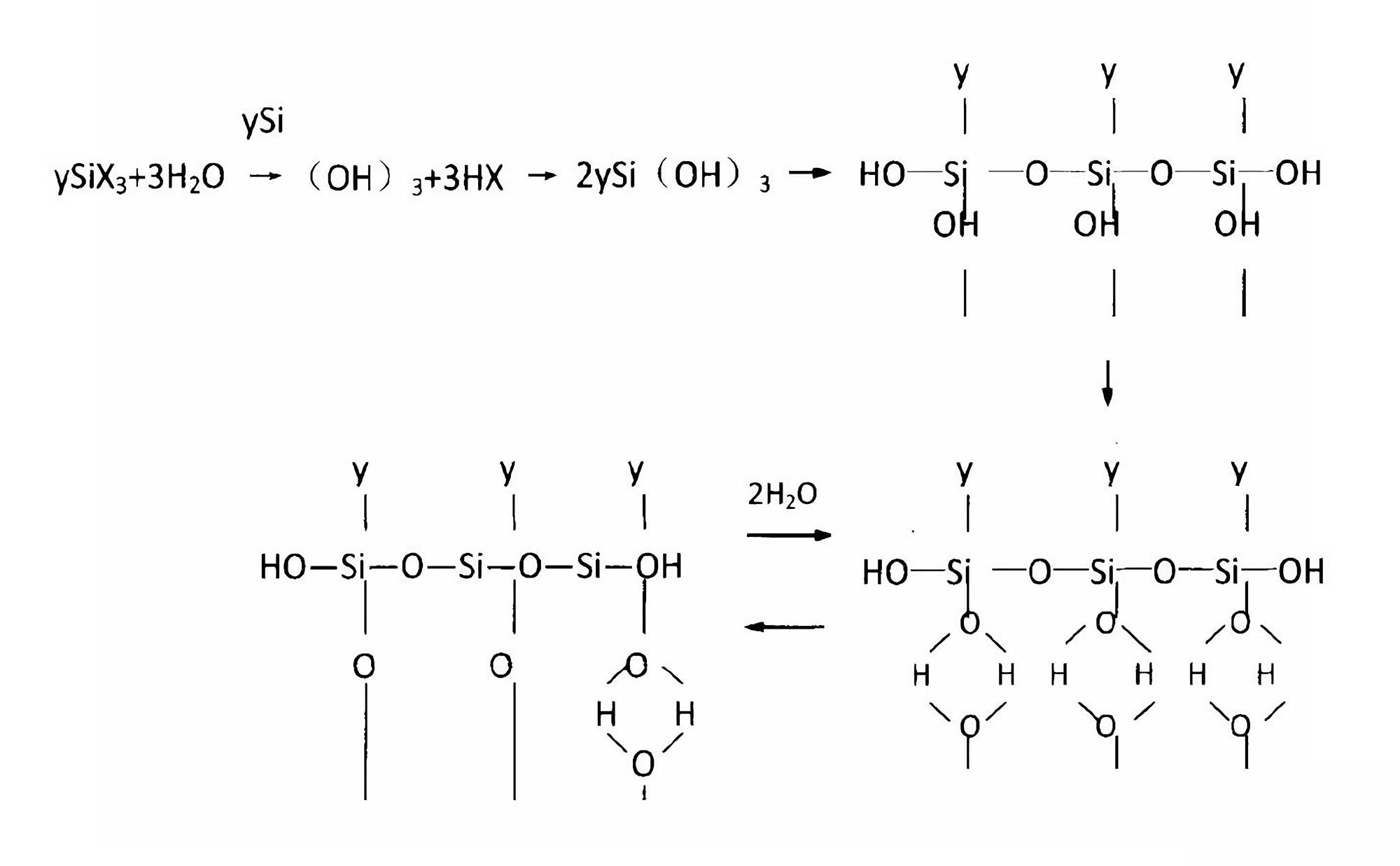
The surface modification principle of silica powder (ultra-fine quartz powder)
The surface modification principle of silica powder (ultra-fine quartz powder) can be summarized as follows: The fineness of the powder is directly related to its surface reaction activity. The finer the particles, the larger the specific surface area, the greater the number of surface active hydroxyl groups, the stronger the chemical reaction potential, and the more remarkable the modification effect.
After mechanical crushing of silicate minerals such as quartz, free radicals or ions are formed on the newly generated surface. Under the action of external conditions, these surfaces further generate active groups such as Si-OH, Si-O-Si and Si-OH···H. These groups have the characteristics of bonding reactions with external functional groups, providing a core chemical basis for surface modification and ultimately achieving the modification goal of improving powder performance.
In addition, the modification effect is regulated by multiple key factors, mainly including reaction temperature, selection and dosage of modifiers, specific treatment methods, and overall modification process parameters.

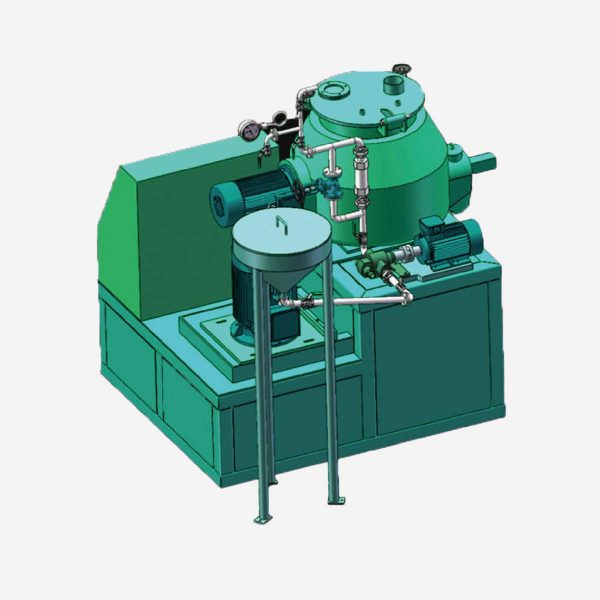
High-Speed Mixer Modification Process for Silica Powder (Ultra-Fine Quartz Powder)
Common Modifiers for Silica Powder
Common modifiers for silica powder mainly include silane coupling agents, aluminate coupling agents, and titanate coupling agents. In addition, fatty acids and cationic surfactants such as cetyltrimethylammonium bromide are also used in industry. These fatty acids and cationic surfactants have the advantages of low cost and simple processes, but their modification effect is general, making them only suitable for producing low-grade modified products.
Performance and cost differences
Silane coupling agents offer the best modification effect on quartz powder, but their cost is relatively high. Aluminate and titanate coupling agents are cheaper and easier to use for modification, yet their modification effect is slightly inferior. The core reason is that the Si-O-Si bond formed by silane coupling agents with silanol groups on the powder surface has high bonding energy and strong stability. In contrast, the Al³⁺ and Ti³⁺ ions in aluminate and titanate coupling agents have large radii, which easily associate with silanol groups and attach to the powder surface. The formed bonds have a lower bond order and weaker stability.
Differences in usage conditions
When using aluminate and titanate coupling agents for modification, almost no water can be added. Otherwise, the coupling agents are likely to be masked, forming emulsions. Their modification effect is optimal when dissolved in organic solvents such as toluene and acetone. For silane coupling agents, hydrolysis treatment is necessary; otherwise, effective bonding with the surface of quartz powder is difficult to achieve.
Development Trends of Surface Modification for Silica Powder
One of the core development directions of quartz powder modification is particle size ultra-refinement and functional high-endization. Relying on its three-dimensional network structure, nano-scale quartz powder exhibits excellent properties such as stability, thickening, thixotropy, and electrical insulation. It is increasingly widely used in fields like films and coatings. Particularly, with its good light transmittance and infrared reflection capacity, it has become a key component of high-end materials. Despite issues such as easy agglomeration, numerous surface active sites, and higher preparation costs compared to micron-scale products, its irreplaceability brought by unique properties drives sustained growth in market demand, propelling the industry to deepen towards ultra-fine and nano-scale modification.
Enhanced customization and adaptability have become core demands in segmented fields. Different application scenarios have significantly varying performance requirements for modified quartz powder. For example, the plastic film industry needs strict control of powder particle size to avoid affecting the film-blowing process and the mechanical properties of finished products. The selection of modifiers must accurately match the chemical structure of filled polymers—for instance, quartz powder modified with alkenyl or chlorohydrocarbon-based coupling agents is suitable for PE materials, while that modified with polysulfide hydrocarbon-based coupling agents is more compatible with rubber filling. Future modification technologies will focus more on segmented scenarios, realizing “one material, one plan” customized modification by targeted adjustment of process parameters and optimization of modifier formulas, thereby improving the compatibility and synergistic performance between the powder and matrix materials.
Technological upgrading and industrialization deepening are the core driving forces of industry development. With scientific and technological progress, quartz powder modification will move towards higher efficiency, lower cost, and multi-functionality. Modifiers will have significantly enhanced versatility, with a broader scope of application. Meanwhile, the preparation technology for ultra-fine and spherical quartz powder will become more economically reasonable, and the upgrading of production equipment will promote the large-scale and industrial application of high-end modification technologies. Currently, China has achieved remarkable results in quartz powder modification research. In the future, its application potential in more unknown high-end fields will be gradually released, and the overall application value and market competitiveness of the industry will continue to improve.