




Ball Mill + Air Classifier Process
The combined process of “ball mill + air classifier” is mature and reliable, serving as the mainstream solution for the production of medium-grade silica powder (200–1250 mesh). It is widely applied in the industry with abundant practical cases, and the single-line capacity ranges from 2t/h to 20t/h. This process mainly produces 200–400 mesh products, and can simultaneously yield small quantities of 600–1000 mesh products with relatively loose quality requirements based on existing production conditions.
The output of the ball mill is restricted by several key factors, including feed fineness, effective diameter and length-diameter ratio of the mill after lining, equipment rotating speed, selection, gradation and filling amount of grinding media, effective length of the mill, and feed rate. Meanwhile, the output of the air classifier is directly related to factors such as powder concentration, rotating speed of the turbo classifier, system air volume and pressure, classification efficiency, material particle size distribution, and target product fineness.
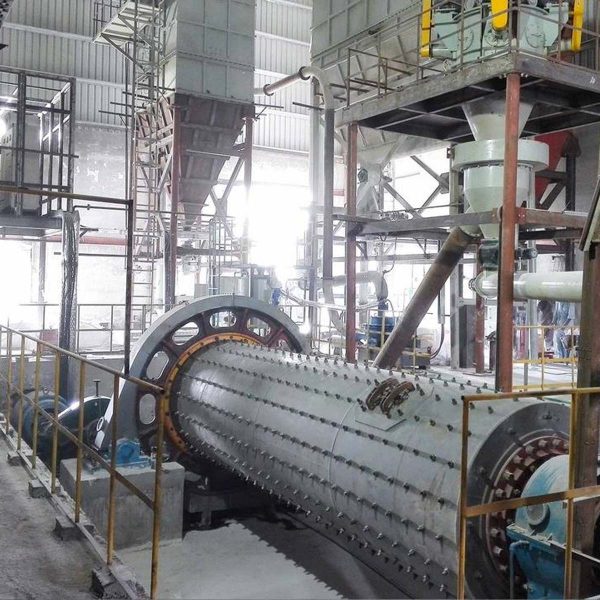
Working Principle
The core working principle of a ball mill is that the rotation of the rotating cylinder drives the internal grinding media (such as steel balls and ceramic balls) to generate impact, grinding and shearing effects on the materials entering the cylinder under the combined action of centrifugal force, gravity and friction, realizing the gradual crushing and refinement of the materials. Its output is affected by various factors, including feed fineness, effective diameter and length-diameter ratio of the mill after lining, equipment rotating speed, selection, gradation and filling amount of grinding media, effective length of the mill, and feed rate.
The output of the air classifier is directly related to various factors such as powder concentration, rotating speed of the turbo classifier, system air volume and pressure, classification efficiency, material particle size distribution, and target product fineness.
Core Features
• Optimize the aspect ratio to avoid over-grinding and achieve optimal grinding results.
• Improve grinding fineness by optimizing jaw plate opening rate/design and using smaller grinding media.
• Slab-type mill tail discharge ensures smooth feeding without retention; no cylinder cooling needed.
• Add grinding aids for ultra-fine powder to boost grinding efficiency.
• Closed system with classifier enables negative-pressure conveying and dust-free operation.
• Iron-free design (alumina ceramics/quartz/SILEX liners/media) for hard minerals.
• Precise quantitative feeding for ball mill, stable even with material density changes.
• Classifier feeding interlocks with mill discharge to ensure system stability and product particle consistency.
Fluidized Bed Opposed Jet Mill Process
The air jet mill production process is a key solution for ultra-fine silica powder processing, capable of accurately producing full-specification products ranging from 325 to 4000 mesh. It is particularly suitable for the deep processing of high-purity quartz powder. By relying on high-speed air currents to drive materials into mutual collision and grinding, the process involves no traditional mechanical contact, which can maximize the retention of the raw material’s inherent purity. The finished product has extremely low impurity content and excellent purity performance.
A notable advantage is its high flexibility in particle size control. Process parameters can be adjusted targetedly according to specific user requirements, enabling full-range customization from conventional fine powder to ultra-fine powder. The product added value is significantly higher than that of ordinary processing technologies. Meanwhile, the production process is stable, and the finished product features uniform particle size distribution and good fluidity, which can meet the strict requirements for powder purity and fineness in fields such as electronics and high-end materials.
It should be noted that due to the need to maintain a high-pressure air flow environment, the process has relatively high energy consumption, which is a key factor to consider in its application.
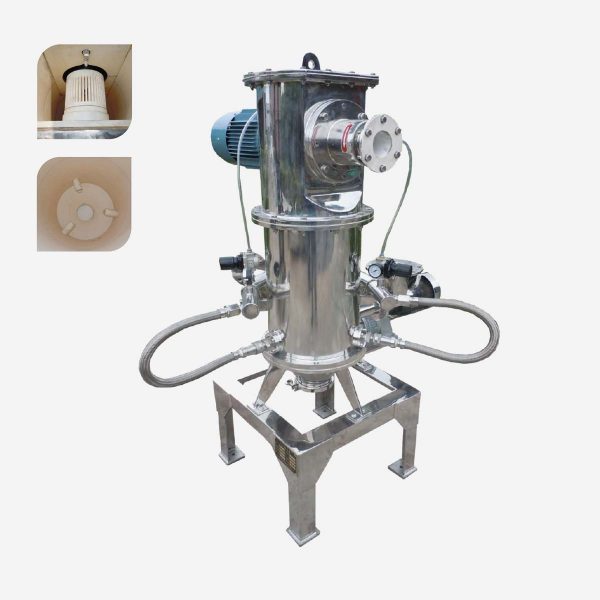
Working Principle
In a jet mill, the grinding gas (usually compressed air) is fed into the grinding chamber through special nozzles and accelerated so strongly that the particles are entrained. In the process, the particles repeatedly collide with each other and are thus comminuted. A big advantage of this type of mill: because there are no mechanical grinding tools with which the particles come into contact, there is no wear. This is why jet mills are excellent for very hard materials or materials that have to be as pure as possible. In a downstream cyclone separator or dust filter, the finely ground material is separated from the grinding gas.
Core Features
- Wide particle size coverage, capable of accurately producing full-specification products from 325 to 4000 mesh, suitable for the deep processing of high-purity quartz powder.
- Mechanical contact-free grinding, maximizing the retention of raw material purity with extremely low impurity content in finished products.
- Flexible particle size control, customizable and adjustable according to user requirements to meet fineness needs of different scenarios.
- Uniform particle size distribution and good fluidity of finished products, adaptable to demanding application scenarios such as electronics and high-end materials.
- High product added value, featuring stronger market competitiveness compared with ordinary processing technologies.