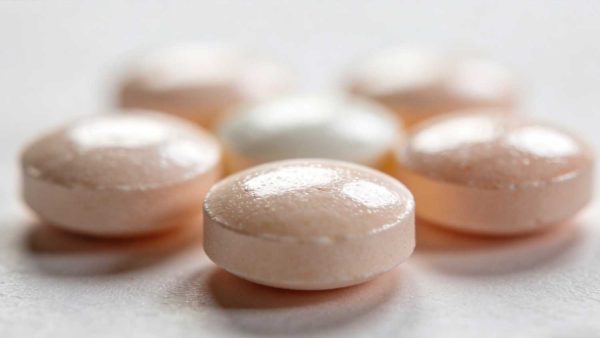
In the modern pharmaceutical industry, GMP (Good Manufacturing Practice) certification has become a necessary threshold for enterprises to enter the global market. From raw material processing to finished product production, every link must meet strict standards of cleanliness, traceability, stability and safety. As key equipment for powder refinement, ultra-fine grinders and classifiers play an irreplaceable role in improving drug dissolution, uniformity, stability and bioavailability.
This article focuses on the GMP-compliant design requirements, core configuration points, material selection, structural features and practical application cases of ultra-fine grinding and classifying systems in the pharmaceutical field, helping pharmaceutical enterprises smoothly pass GMP certification and achieve stable, efficient and standardized production.
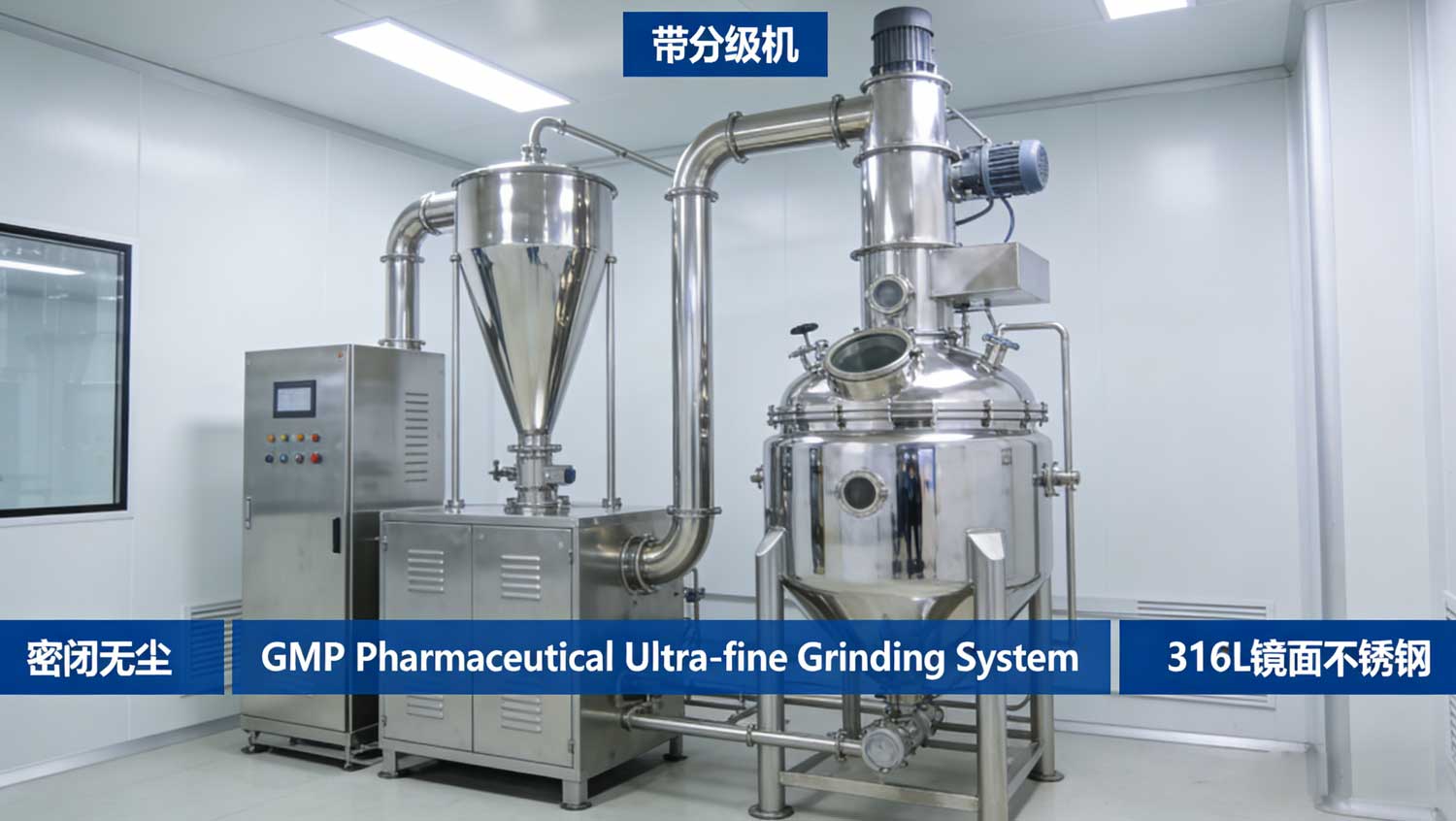
1. Why Pharmaceutical Grinding Equipment Must Meet GMP Standards
Pharmaceutical products are directly related to human health and safety, so their production equipment has extremely strict requirements. Traditional grinding equipment often has problems such as dead corners, material residue, difficult cleaning, easy metal contamination, and poor airtightness, which cannot meet GMP specifications and may lead to:
- Product contamination and unqualified testing results
- Failure to pass GMP on-site inspection
- Risk of cross-contamination between batches
- Inability to provide complete equipment verification data
- Failure to meet dust control, explosion-proof and environmental protection requirements
Therefore, ultra-fine grinding and classifying equipment matched with GMP must be designed and manufactured specifically for the pharmaceutical industry, rather than simply modified from ordinary industrial equipment.
2. Core GMP Compliance Requirements for Ultra-fine Grinding & Classifying Equipment
2.1 Material Selection in Full Compliance with Pharmaceutical Standards
All parts contacting materials must use pharmaceutical-grade certified materials to ensure no precipitation, no dissolution, no reaction with drugs, and easy cleaning and disinfection.
- Preferred material: 316L stainless steel (mirror polished, Ra ≤ 0.4 μm) — suitable for most pharmaceutical raw materials, with good corrosion resistance and easy cleaning.
- High-purity / anti-corrosion drugs: Ceramic lining (alumina / zirconia) — no metal precipitation, avoiding contamination of drugs with metal ions.
- Sealing parts: Food-grade / pharmaceutical-grade silicone, PTFE — no peculiar smell, no dissolution, meeting the requirements of drug contact.
- Prohibited materials: Carbon steel, ordinary paint, easy-to-fall-off materials — to avoid drug contamination.
2.2 No Dead Corners, No Residue, Easy to Clean and Sterilize
GMP clearly requires that equipment should not accumulate materials, not hide dirt, and be easy to disassemble and clean.
- Smooth inner wall transition, no welding burrs, no concave holes, avoiding material residue.
- Quick-release structure design, which can be disassembled and cleaned without tools, reducing the difficulty of cleaning.
- Supports CIP (Cleaning in Place) / SIP (Sterilization in Place) — online cleaning and sterilization can be realized without disassembling the equipment, avoiding cross-contamination caused by disassembly.
- Resistant to alcohol, purified water, ozone and other common disinfectants, ensuring that no cleaning agent residue remains.
2.3 Fully Closed, Dust-Free, Negative Pressure Operation
To prevent dust leakage, cross-contamination and environmental pollution:
- Equipped with a fully closed negative pressure system, no dust overflow during operation, meeting the cleanliness requirements of pharmaceutical workshops (Class 10000 / Class 1000).
- Equipped with HEPA high-efficiency filtration and dust recovery system, the discharged gas meets environmental protection standards.
- High-efficiency air sealing and shaft sealing structure to prevent material leakage and external impurities from entering the equipment.
2.4 Traceability, Verifiability and Recordability
GMP emphasizes complete data traceability, so the equipment must have:
- Stable control system, real-time recording of temperature, speed, pressure, air volume and other parameters.
- Data can be exported, printed and archived, meeting the data integrity requirements of GMP, FDA, EU and other standards.
- Can provide complete IQ (Installation Qualification), OQ (Operational Qualification), PQ (Performance Qualification) verification documents to meet the requirements of on-site inspection.
2.5 Safety Design for Pharmaceutical Characteristics
Many pharmaceutical raw materials are flammable, explosive, oxidizable or heat-sensitive, so the equipment must have:
- Inert gas (nitrogen) closed-cycle protection system — suitable for oxidizable and flammable raw materials.
- Low-temperature / cryogenic grinding structure — to avoid the denaturation of heat-sensitive drugs caused by temperature rise during grinding.
- Explosion-proof structure and anti-static design — meeting the safety requirements of flammable and explosive materials.
- Overload protection, emergency stop and interlock control — ensuring production safety.
3. GMP-oriented Ultra-fine Grinding & Classifying Combined Process
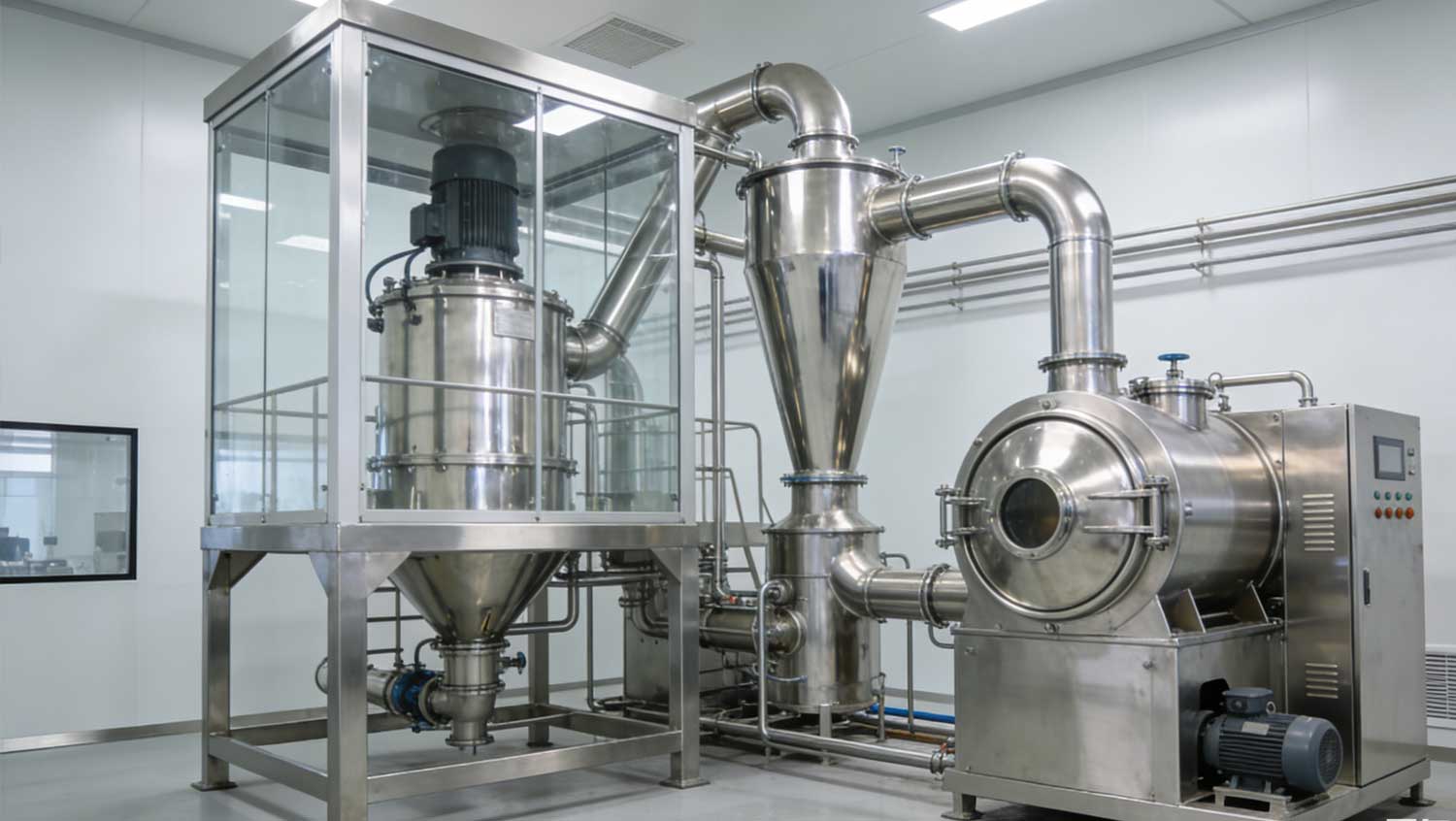
For pharmaceutical raw materials, a single grinding function is often difficult to meet the requirements of narrow particle size distribution and high uniformity. The combination of ultra-fine grinder and high-precision classifier has become the standard configuration for GMP production.
Typical Process Flow
- Raw material feeding: Closed vacuum feeding or screw feeding, no dust, no contact with the outside, avoiding contamination.
- Pre-crushing / pre-treatment: Remove agglomerates of raw materials to ensure uniform feeding and avoid uneven grinding.
- Ultra-fine grinding: According to the characteristics of raw materials, select mechanical grinding or jet grinding, and adopt low-temperature / inert protection if necessary.
- High-precision classification: Real-time classification by classifier, separating unqualified coarse particles, ensuring that the particle size (D50, D90) meets the standard, and avoiding over-grinding.
- Dust removal and filtration: HEPA high-efficiency filtration to ensure the cleanliness of the finished product.
- Closed collection and discharge: Connect with the subsequent packaging or granulation process, realizing fully closed production.
- Online cleaning / sterilization: After the production of each batch, CIP/SIP operation is carried out to avoid cross-contamination between batches.
4. Specific Application Cases (GMP-compliant)
4.1 Case 1: API (Active Pharmaceutical Ingredient) — Cephalosporin Raw Material
- Material characteristics: Heat-sensitive, oxidizable, easy to decompose when heated, requiring high purity (no metal contamination).
- Equipment configuration: Ceramic-lined jet mill + high-precision classifier + nitrogen closed-cycle system.
- GMP design highlights:
- Contact parts are made of zirconia ceramic, no metal ions are precipitated, meeting the purity requirements of API.
- Nitrogen closed-cycle protection, avoiding oxidation of raw materials and ensuring the stability of drug efficacy.
- Fully closed negative pressure system, HEPA filtration, meeting the cleanliness of Class 1000 workshop.
- Supports CIP online cleaning and provides complete IQ/OQ/PQ verification documents.
- Application effect: The particle size D50 is 5–8 μm, the uniformity is ≤30%, the enzyme activity retention rate is ≥98%, and it successfully passes EU GMP and FDA inspections.
4.2 Case 2: Traditional Chinese Medicine (TCM) Extract Powder — Ginseng Extract
- Material characteristics: Heat-sensitive, easy to stick to the wall, high hygiene requirements, no metal contamination.
- Equipment configuration: Low-temperature ultra-fine grinder + high-efficiency classifier + closed feeding and discharging system.
- GMP design highlights:
- The inner wall is mirror-polished 316L stainless steel, no dead corners, and the wall sticking is reduced by 80% through air sweeping design.
- Low-temperature grinding (temperature ≤35℃) to avoid the decomposition of active ingredients in TCM extract.
- Closed vacuum feeding and discharging, no contact with the outside, ensuring the color and efficacy of the extract.
- Equipped with online cleaning system, which can complete cleaning within 30 minutes, avoiding cross-contamination between batches.
- Application effect: The particle size D50 is 10–15 μm, the dissolution rate is increased by 40% compared with the traditional process, and it meets the GMP requirements of TCM pharmaceutical enterprises.
4.3 Case 3: Pharmaceutical Excipient — Lactose Powder
- Material characteristics: Hygroscopic, easy to agglomerate, requiring good fluidity for subsequent tablet pressing.
- Equipment configuration: Mechanical ultra-fine grinder + high-precision classifier + dehumidification system.
- GMP design highlights:
- The contact parts are 316L mirror polished, and the dehumidification system is added to control the humidity ≤40%, avoiding agglomeration.
- The classifier adjusts the particle size online, ensuring that the fluidity of lactose powder meets the tablet pressing requirements (angle of repose ≤30°).
- Complete data recording and verification documents, meeting the traceability requirements of pharmaceutical excipients.
- Application effect: The particle size is uniform, the fluidity is good, the tablet pressing qualification rate is ≥99.5%, and it is applied to dozens of pharmaceutical enterprises.
4.4 Case 4: High-Toxicity Pharmaceutical Raw Material — Antibiotic Intermediate
- Material characteristics: High toxicity, easy to volatilize, requiring strict isolation and no leakage.
- Equipment configuration: Fully closed negative pressure ultra-fine grinding system + special cleaning structure.
- GMP design highlights:
- The equipment is equipped with a special sealed cabin, and the operation area is isolated from the external environment to avoid toxic gas leakage.
- Special PTFE lining, no adsorption of toxic raw materials, easy to clean and no residue.
- Equipped with a special waste gas treatment system to meet environmental protection and safety requirements.
- The control system is remote-operated to avoid direct contact of operators with toxic materials.
- Application effect: Safe and stable operation, no leakage, meeting the GMP requirements of high-toxicity pharmaceutical production, and passing the national pharmaceutical safety inspection.
5. How to Select GMP-compliant Ultra-fine Grinding & Classifying Equipment
To help pharmaceutical enterprises quickly select suitable equipment and avoid investment risks, the following key points are summarized:
- Confirm material characteristics: Clarify whether the raw material is heat-sensitive, oxidizable, corrosive, toxic or flammable and explosive — this determines the equipment’s cooling, inert protection and material selection.
- Clarify GMP level: Oral medicine, injection, API, TCM and other different categories have different requirements for cleanliness and material, which affects the equipment’s material and structure.
- Determine particle size and output: Confirm the target D50/D90 particle size and hourly output to select the model and power of the grinder and classifier.
- Confirm cleaning and verification requirements: Whether CIP/SIP is needed, and whether the supplier can provide complete IQ/OQ/PQ verification documents.
- Verify supplier qualification: The supplier must have experience in pharmaceutical equipment production, be able to provide GMP-related design and verification services, and have relevant industry cases.
A truly GMP-adapted ultra-fine grinding and classifying system is not only a piece of equipment, but a complete set of process solutions including design, manufacturing, verification and after-sales service, which is the key to helping pharmaceutical enterprises pass certification and achieve stable production.
6. Summary
In the pharmaceutical industry, ultra-fine grinders and classifiers are not only production equipment, but also an important part of the GMP management system. From material selection, structural design to process matching, every detail must comply with GMP standards to ensure the safety, purity and stability of drugs.
The above specific cases fully show that only by selecting equipment that is professionally adapted to GMP requirements can enterprises effectively improve product quality, smoothly pass various international certifications, reduce production risks, and enhance market competitiveness. For pharmaceutical enterprises focusing on standardized and high-quality development, choosing a professional GMP-compliant ultra-fine grinding and classifying system is a critical step to achieve long-term development.