1. Main Causes of Material Adhesion in Classifiers
-
High material humidity increases particle viscosity
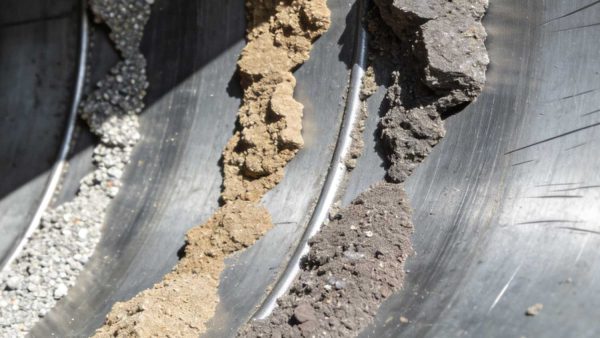
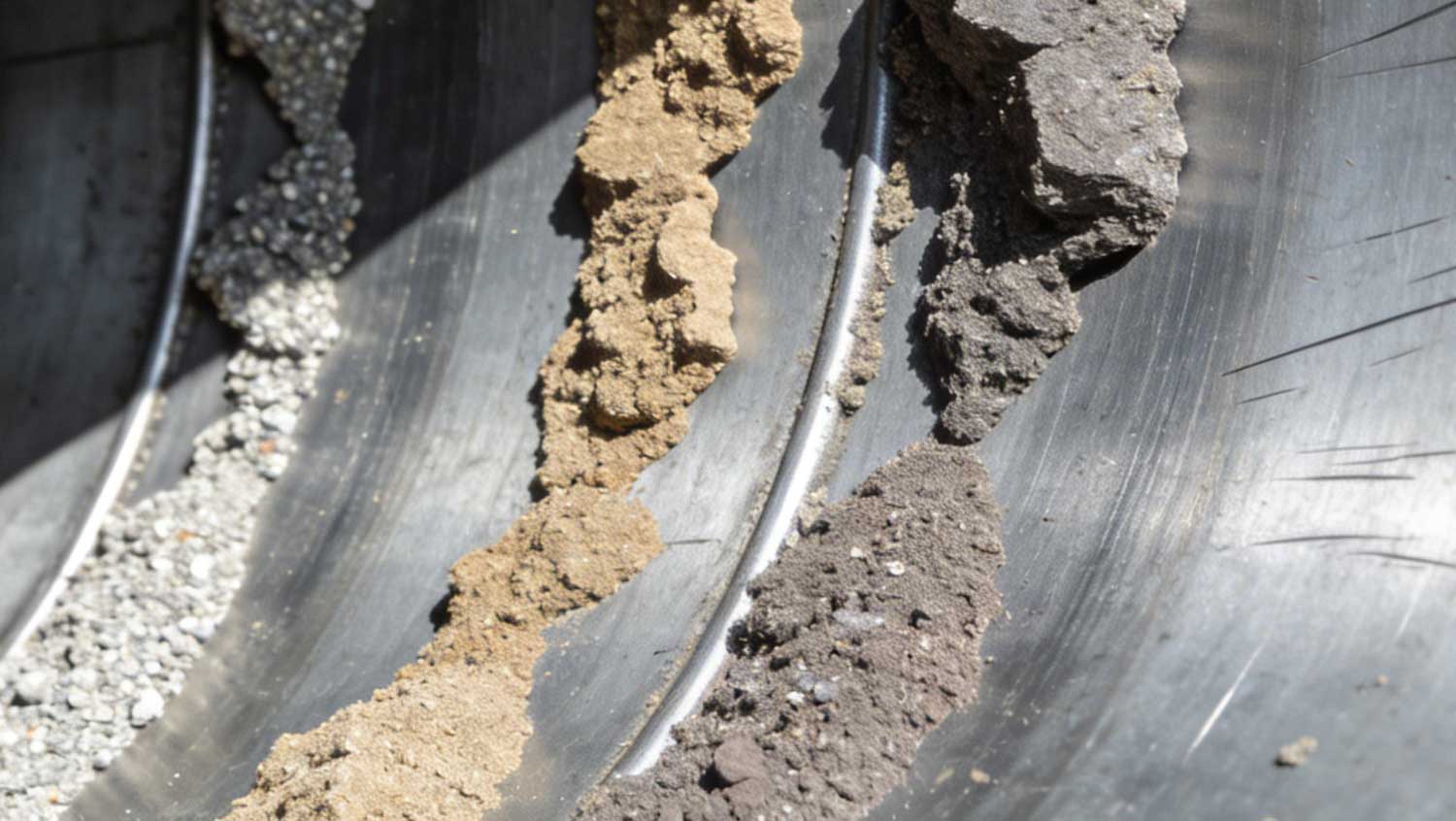
Excessive feed moisture, high environmental humidity and water vapor generated during grinding cause fine particles to agglomerate and adhere to metal surfaces, forming stubborn deposits.
-
Low air velocity results in insufficient carrying capacity
Insufficient inlet air, rising airflow or rotor linear speed fails to remove fine particles in time. Particles stay too long in the chamber, depositing and sticking to walls.
-
Uneven air speed distribution and local eddy current retention
Improper air duct design, deflector angle deviation or unstable intake create local eddies or low-speed zones, which are prone to adhesion.
-
Material properties and electrostatic adsorption
Ultrafine, lightweight and polar materials easily generate static electricity. Without proper humidity and airflow control, static electricity further worsens wall adhesion.
2. Humidity Regulation: Reducing Particle Viscosity at the Source
- Control feed moisture
- Dry, dehumidify or preheat hygroscopic materials in advance to keep moisture within the process range.
- Install sealing and moisture-proof measures in silos and conveying sections to prevent environmental moisture.
- Optimize classification airflow humidity
- Use dehumidified cold air or dry compressed air for high-humidity environments or hygroscopic materials.
- Properly increase system temperature (within material heat resistance) to reduce condensation and particle surface viscosity.
- Avoid local condensation
- Keep classifier and pipeline temperature slightly above dew point to prevent moisture condensation on walls.
- Install condensate drainage and gas-water separation devices for closed circulation systems.
3. Air Speed Regulation: Ensuring Particles Are Carried Without Deposition
- Increase inlet and rising air speed
- Properly increase main fan air volume and pressure to improve suspension and conveying capacity.
- Ensure uniform and stable rising airflow to eliminate low-speed deposition zones.
- Optimize rotor linear speed and air volume matching
- Low rotor speed → insufficient classification force → fine powder accumulation → wall adhesion.
- Excessively high rotor speed → higher energy consumption, wear and finer particle size.
- Use frequency conversion to find the optimal speed range for accuracy, output and minimal adhesion.
- Eliminate dead zones and optimize flow field
- Adjust deflectors, distributors and inlet angles to form a stable, uniform and dead-zone-free flow field.
- Increase local air speed or install air purge structures at high-adhesion areas.
4. Combined Humidity and Air Speed Control (Field Operation Suggestions)
-
Control humidity first, then adjust airflow
Stabilize feed and system humidity before fine-tuning air speed to avoid forced high-volume flushing under high humidity.
-
Establish standard working parameters
For different materials, record:
- Feed humidity / system dew point
- Main fan frequency, wind pressure and air volume
- Classifier rotor speed and linear speed
Form a standardized process curve to reduce adhesion and commissioning time.
- Linked automatic control
High-end intelligent classifiers support:
- Online humidity monitoring → automatic dehumidification / heating
- Wind pressure fluctuation → automatic air volume and speed compensation
Closed-loop intelligent control significantly reduces adhesion.
- Auxiliary anti-adhesion measures
- Install air nozzles and vibrating devices for regular cleaning
- Use smooth and wear-resistant liners to reduce adhesion
- Add static eliminators to reduce electrostatic adhesion
5. Implementation Effects
- Over 70% reduction in classifier wall adhesion, less frequent cleaning
- More stable particle size, improved classification accuracy and fewer rejects
- Longer continuous operation and higher effective output
- Lower energy consumption, wear and maintenance costs