

Performance and features
Core Vibration Principle: 3D Compound Rotational Motion Drives Screening
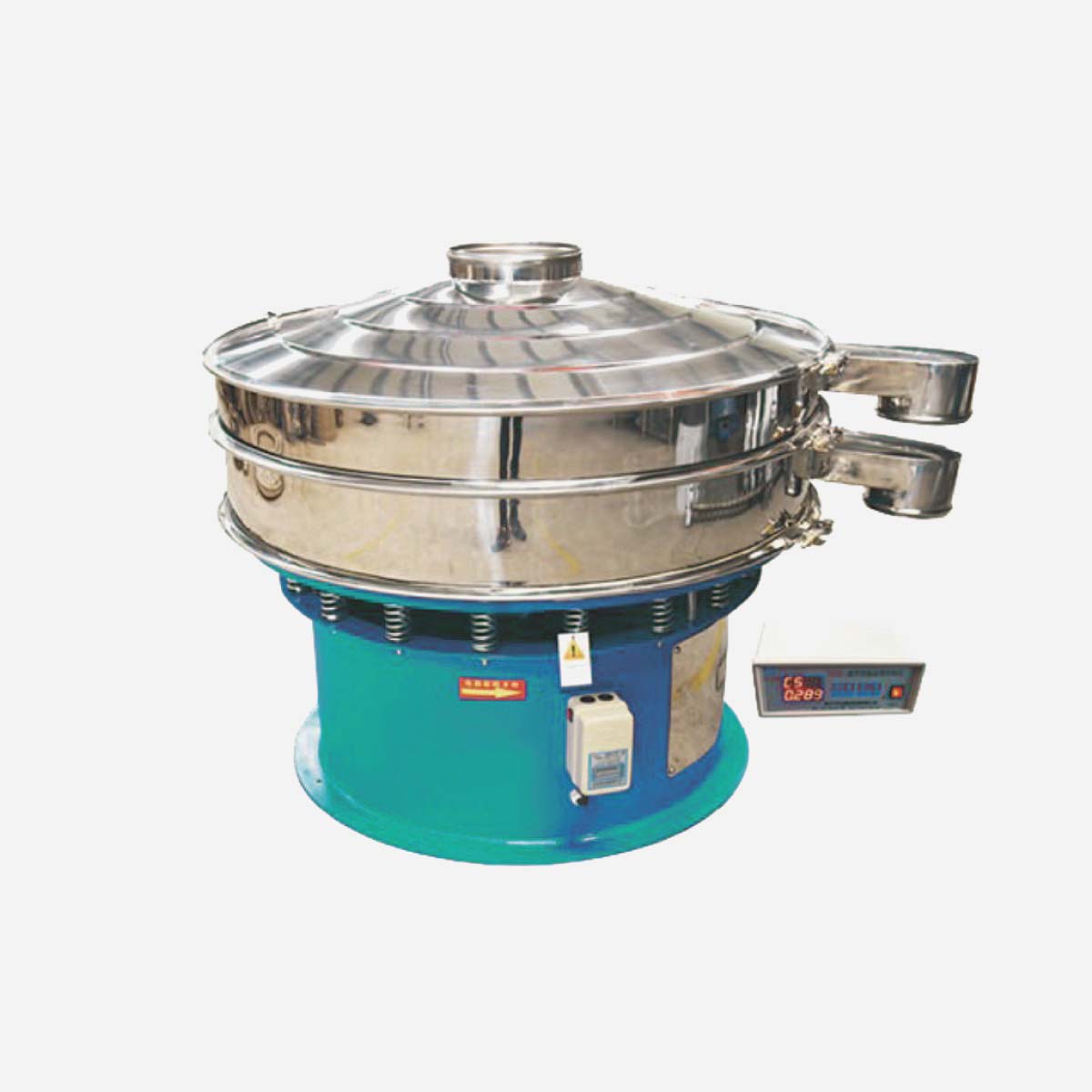
The vibrating screen's motor drives the vibrator to generate excitation during operation. Through spring connection, the vibrating parts produce compound rotational vibration, with a complex spatial three-dimensional trajectory—circular in horizontal projection and elliptical in two vertical projections (i.e., up-down, left-right, and tilt 3D motion), providing a power foundation for efficient screening.
Adjustable Trajectory Design: Phase Angle Controls Material Movement Direction
By adjusting the phase angle of the upper and lower rotating weights of the vibrator, the movement trajectory of materials on the screen surface can be flexibly changed: when the phase angle is 0° (upper and lower weights overlap), materials radiate outward from the center; when the phase angle is 90°, materials gather toward the center, adapting to different screening needs.
Motion Characteristic Advantages: Multi-Dimensional Vibration Improves Screening Efficiency
The 3D compound rotational vibration enables materials to fully flip and disperse on the screen, reducing clogging probability while expanding the contact area between materials and the screen. Compared with single-direction vibration, it achieves more thorough screening and higher efficiency, adapting to classification needs of materials with different particle sizes.
Structural Design Logic: Integration of Excitation-Transmission-Adjustment
Adopting a transmission structure of "motor + vibrator + spring," the excitation force transmission is stable. The phase angle adjustment mechanism of the weights is simple and easy to operate, allowing switching of material movement modes without complex modifications. The structure is highly practical, adapting to diverse industrial screening scenarios.
Technical Parameters
| Parameters / Model ZS | 500 | 600 | 800 | 1000 | 1200 | 1500 | 2000 |
|---|---|---|---|---|---|---|---|
| Diameter (mm) | 500 | 600 | 800 | 1000 | 1200 | 1500 | 2000 |
| Effective screen area (m²) | 0.195 | 0.28 | 0.5 | 0.785 | 1.13 | 1.77 | 3.4 |
| Number of layers | 1~4 | 1~4 | 1~4 | 1~4 | 1~4 | 1~4 | 1~4 |
| Vibration frequency (Hz) | 1400 | 1400 | 1400 | 1400 | 1400 | 1400 | 1400 |
| Screen mesh number (holes/inch) | 5~325 | 5~325 | 5~325 | 5~325 | 5~325 | 5~325 | 5~325 |
| Motor power (kW) | 1.1 | 1.1 | 1.5 | 1.5 | 2.2 | 3 | 4 |
| Single layer weight (kg) | 140 | 160 | 190 | 230 | 260 | 320 | 400 |
Note: The production capacity is closely related to the particle size, specific gravity, hardness, moisture and other indicators of the raw materials.
The above parameters are for reference only, please consult our engineers for details.