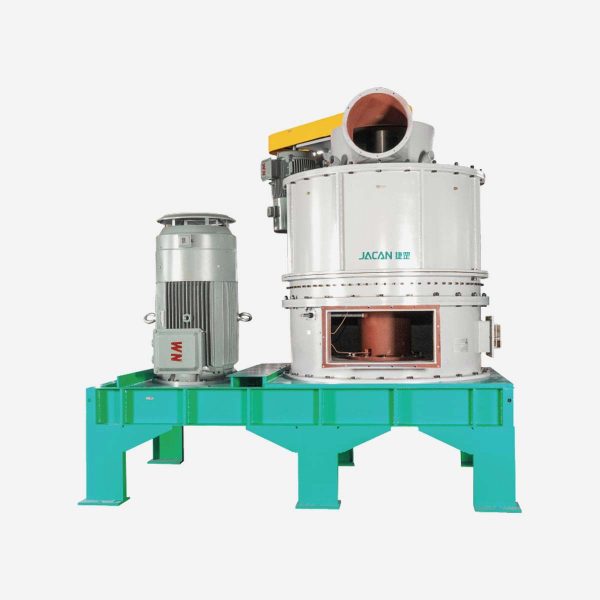
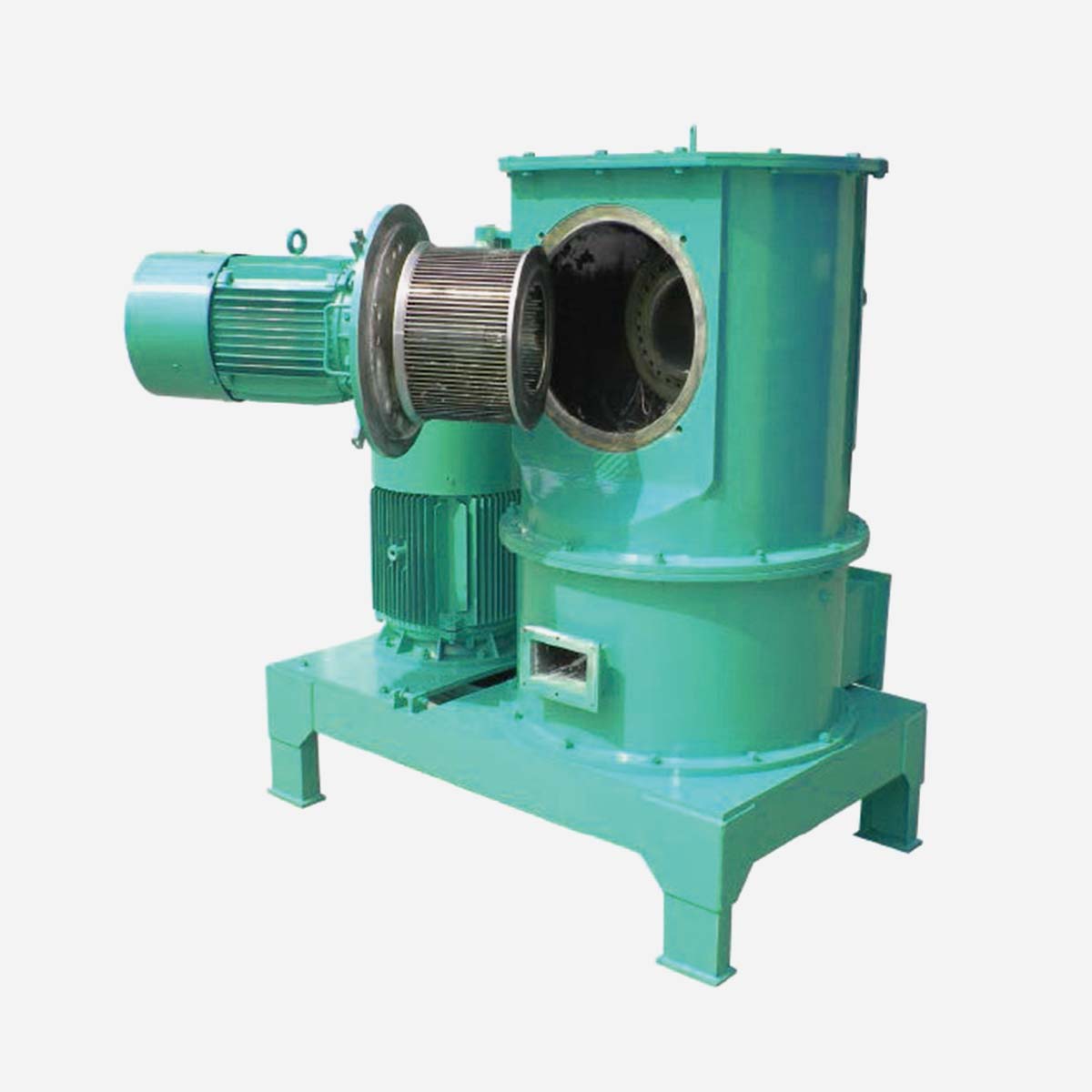
Compared with -A type, it adopts horizontal classifying wheel design with high classifying accuracy, which can meet the requirements of higher fineness.

Compared with -A type, it adopts horizontal classifying wheel design with high classifying accuracy, which can meet the requirements of higher fineness.

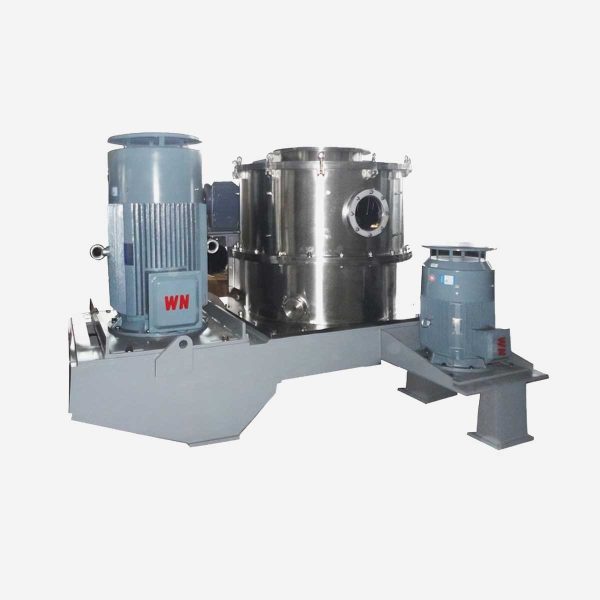
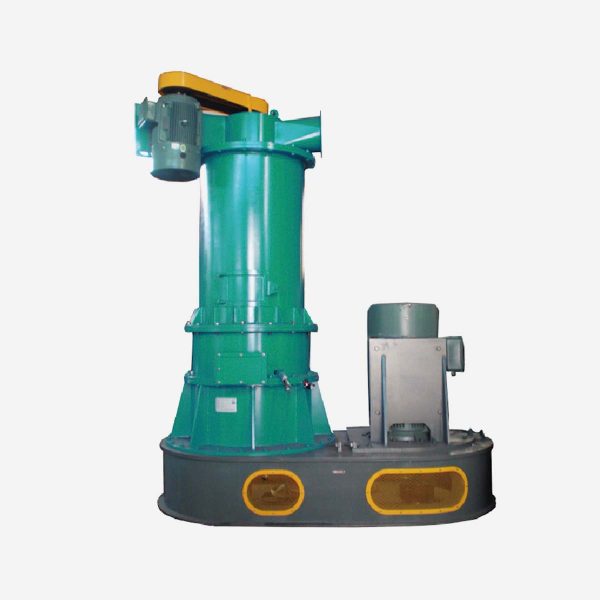
The inner cavity of the machine body is cylindrical, the upper section is an air classifier and the lower section is an ultra-fine grinding mill. The grinding chamber is composed of a grinding disc and a grinding block, which is used to crush materials into fine powder. The grading chamber is composed of a classifying impeller, which can separate fine powder into two types of particle specifications: qualified and unqualified. The qualified particles are discharged through the discharge pipe and collected by the cyclone collector. Unqualified particles will return to the grinding chamber along the inner wall of the cavity and continue shattered.
The grinding disc and classifying impeller are driven by their respective driving systems, the speed of the classifying impeller is adjustable to meet different size requirements. The spiral feeding system is located on the inner wall of the machine and is used to send materials uniformly into the grinding chamber, the amount can be adjusted by rotational speed.

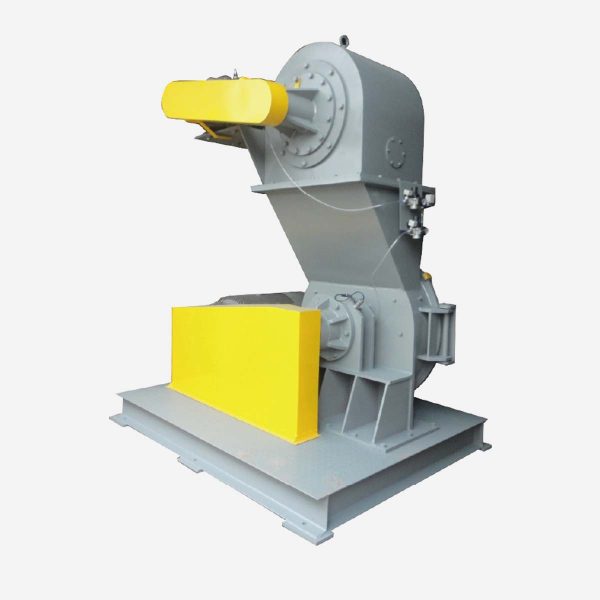
Integrates mechanical impact ultra-fine crushing and high-efficiency turbo ultra-fine classification functions. After crushing, materials enter the machine with air flow and undergo forced classification by the turbo classifier. Replacing the traditional screen with a classification device, it simultaneously completes the two processes of ultra-fine crushing and micro-powder separation, achieving higher crushing efficiency.
Only by adjusting the rotation speed of the classification impeller can the product particle size range be flexibly regulated without stopping the machine, featuring convenient operation and precise adaptation to different production requirements.
During the crushing process, the air flow forms a strong cooling effect with low temperature rise during operation. It is suitable for processing heat-sensitive and fibrous materials, ensuring uniform and stable finished product particle size.
For special scenarios such as low-specific-gravity materials, PPM-level screen residue requirements, and ceramic components, customized designs are adopted for the crushing and classification components, upgrading the general-purpose model to a special-purpose equipment to further improve crushing efficiency.
| Parameters / Model JCSM-H | 280 | 410 | 510 | 630 | 710 | 800 | 900 | 1000 | 1250 | 1500 |
|---|---|---|---|---|---|---|---|---|---|---|
| Grinding motor power (kW) | 7.5 | 22 | 30 | 37 | 45 | 55 | 75 | 90 | 132 | 200 |
| Classification motor power (kW) | 4 | 5.5 | 7.5 | 11 | 11 | 15 | 18.5 | 22 | 30 | 45 |
| Particle size (μm) | 5~150 | 5~150 | 5~150 | 8~120 | 8~120 | 8~120 | 8~120 | 10~150 | 10~150 | 10~150 |
| Air volume(max)(m³/h) | 600 | 1800 | 3000 | 3600 | 4500 | 5400 | 6000 | 7500 | 12000 | 16500 |
Note: The production capacity is closely related to the particle size, specific gravity, hardness, moisture and other indicators of the raw materials.
The above parameters are for reference only, please consult our engineers for details.