Knowledge & Trends

Including industry application cases, selection guides, machine use and maintenance, technical insights, industry trends, etc.
list_altTechnical Insights

How to Choose Conveyor Equipment for Ultrafine Grinders? (Precise Selection Guide)

In an ultrafine grinding production line, supporting conveyor equipment is a key link connecting the ultrafine grinder with subsequent processes such as classification, mixing, and packaging, directly determining production efficiency, powder purity, and equipment operation and maintenance costs. Many users fall into confusion when selecting supporting conveyor equipment after purchasing…
list_altOperation & Maintenance, Technical Insights

Ultrafine Grinding Seal Leakage Treatment Methods and Seal Selection

As a core deep processing equipment in non-metallic minerals, medicine, food, chemical and other industries, the sealing performance of the ultrafine grinding directly determines production efficiency, product quality and production safety. Seal leakage is a frequent fault during the operation of ultrafine grinding, which not only causes dust overflow and…
list_altIndustry Applications

Ball Mill Ultrafine Grinding + Classification Integration Case: Process Optimization of a Quartz Enterprise

In the quartz deep processing industry, the fineness and particle size uniformity of ultrafine powder directly determine the product added value. However, the traditional production mode of separate ball mill grinding and classification often leads to pain points such as high energy consumption, low productivity, and insufficient product qualification rate,…
list_altIndustry Applications, Technical Insights

Pharmaceutical Industry GMP Certification Support: Application of Ultra-fine Grinding and Classifying Equipment

In the modern pharmaceutical industry, GMP (Good Manufacturing Practice) certification has become a necessary threshold for enterprises to enter the global market. From raw material processing to finished product production, every link must meet strict standards of cleanliness, traceability, stability and safety. As key equipment for powder refinement, ultra-fine grinders…
list_altIndustry Applications, Technical Insights

Selection of Ultra-fine Grinding Equipment for Chemical Raw Materials: Corrosion Resistance and Stability Considerations

In the field of chemical powder processing, ultra-fine grinding equipment is key to determining particle size, purity, and production continuity. Chemical raw materials often exhibit acidity, alkalinity, oxidizability, hygroscopicity, flammability, and explosiveness. Ordinary equipment easily suffers from corrosion, rust, leakage, short service life, and poor stability. Therefore, corrosion resistance and…
list_altIndustry Applications, Technical Insights

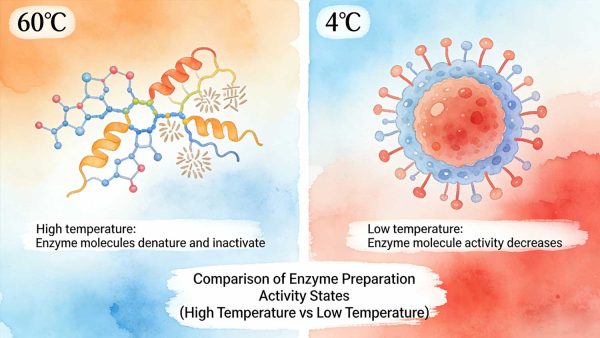
Cryogenic Ultra-fine Grinding Case: Processing Solution for Heat-sensitive Materials (Enzymes)

As a typical heat-sensitive bioactive material, enzyme preparations are widely used in feed, food, pharmaceutical, chemical and other industries. The traditional grinding process tends to cause reduced enzyme activity and denaturation due to frictional heat generation, which has become a common pain point in the industry. Cryogenic ultra-fine grinding technology,…
list_altTechnical Insights

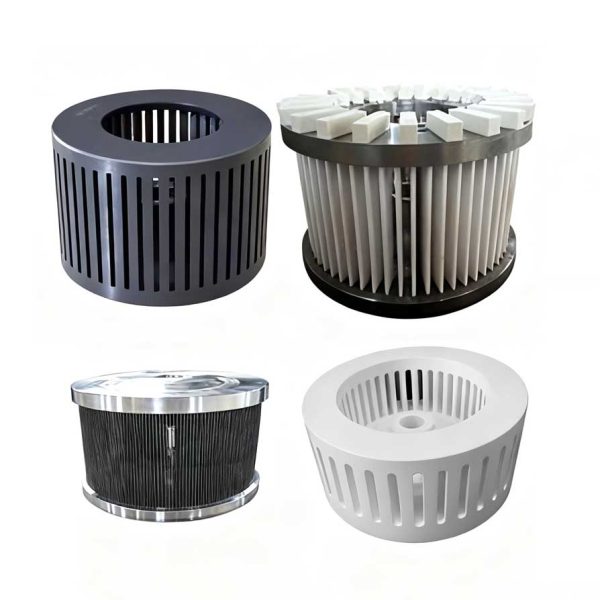
Material Selection for Classifiers: Special Requirements in Different Industries

In industrial scenarios such as powder processing, fine separation and material classification, the classifier is a key piece of equipment that determines particle size accuracy, production efficiency and product purity. The material of the classifier directly affects equipment service life, material purity, corrosion and wear resistance, and compliance. Different industries…
list_altIndustry Applications, Technical Insights

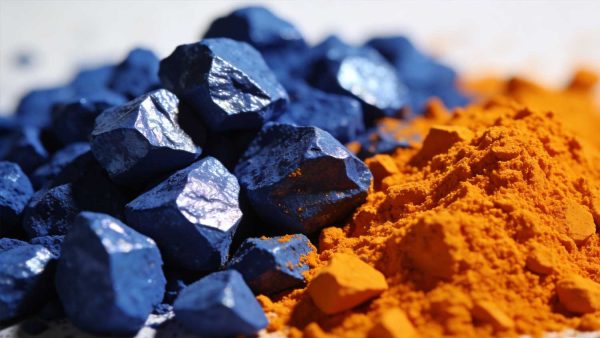
Ultrafine Grinding of Pigments: Uniform Particle Size Treatment for Organic Pigments

In the coatings, inks, plastics, printing and dyeing, and high-end color paste industries, the particle size and distribution uniformity of organic pigments directly determine tinting strength, transparency, gloss, dispersibility, and storage stability. Traditional grinding processes often suffer from wide particle size distribution, excessive fine powder, residual coarse particles, and poor…
list_altOperation & Maintenance

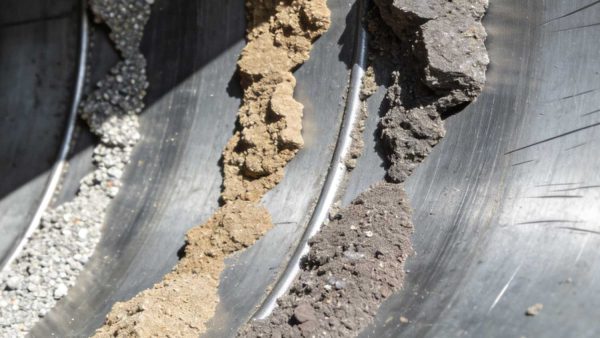
Material Adhesion in Classifiers: Humidity and Air Speed Regulation Solutions

Material adhesion is a common and disruptive issue in ultrafine powder grinding and classification production lines. Especially in high-precision classification scenarios such as lithium battery materials, non-metallic minerals, fine chemicals and new energy materials, adhesion on classifier inner walls, guide disks, rotors and pipelines can lead to reduced classification accuracy,…
全局代码(添加在网站的每一页body结束之前)