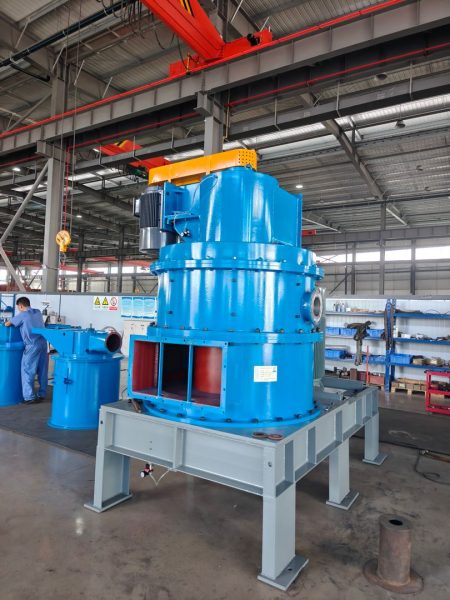
I. Why “Indicators” Matter More Than “Mesh” When Choosing an Ultrafine grinding MILLS?
In ultrafine powder processing scenarios, enterprises often fall into the trap of “only focusing on mesh” when purchasing—blindly pursuing “3000 mesh” or “5000 mesh” while ignoring core indicators such as particle size distribution, explosion-proof rating, and purity control. This ultimately leads to uneven product particle size, non-compliant production lines, and even safety accidents.
Whether it’s the crushing of API active ingredients in the pharmaceutical industry (requiring ≥99.9% purity and GMP compliance), the processing of lithium battery materials in the new energy sector (needing D50=3-5μm and oxidation resistance), or the handling of flammable and explosive materials in the chemical industry (relying on explosion-proof design), accurately understanding indicator parameters is the prerequisite for selecting the right equipment. This article breaks down the 3 core indicators of ultrafine crushers (fineness D50/D97, explosion-proof rating, and purity control) to help you avoid selection pitfalls and accurately match industry needs.
II. Fineness Indicator: Beyond “3000 Mesh” – D50/D97 Is the Core
1. The “Trap” of Mesh and Particle Size: Inconsistent Standards Across Industries
“Mesh” is a basic term in the powder industry, but it has obvious limitations: mesh standards vary greatly across regions and industries (e.g., Chinese standards vs. American standards), and mesh only reflects “sieve aperture” without indicating particle distribution uniformity. The more scientific industry term is “particle size” (unit: μm), with core corresponding relationships as follows (universal standards):
- 1000 mesh ≈ 13μm (suitable for ordinary coatings, organic fertilizers)
- 2000 mesh ≈ 7μm (suitable for food additives, ordinary chemical raw materials)
- 3000 mesh ≈ 4.5μm (suitable for traditional Chinese medicine extracts, lithium battery anode materials)
- 5000 mesh ≈ 2μm (suitable for semiconductor materials, high-end ceramic raw materials)
2. D50/D97: “Golden Parameters” of Particle Size Distribution
What truly determines product quality is “particle size distribution,” which requires understanding two key data points: D50 and D97:
- D50 (Median Particle Size): Indicates that 50% of the powder particles are smaller than this value, reflecting the “average fineness” of the powder. For example, D50=3μm means half of the particles are finer than 3μm and half are coarser, serving as the core reference for selection (directly affecting material dissolution, mixing, and molding effects).
- D97 (Cumulative Particle Size): Indicates that 97% of the powder particles are smaller than this value, reflecting the “maximum particle control” of the powder. For example, D97=10μm means only 3% of the particles exceed 10μm, directly determining product uniformity and stability (avoiding product defects caused by large particles).
3. D50/D97 Requirements for Different Industries (Practical Reference)
| Industry | Core Requirement | Recommended D50 Range | Recommended D97 Upper Limit |
| Traditional Chinese Medicine/Pharmaceutical | Improve active ingredient dissolution rate | ≤5μm | ≤15μm |
| Lithium Battery Materials | Ensure charge-discharge efficiency | 3-5μm | ≤8μm |
| Fine Chemicals | Ensure mixing/molding stability | 10-20μm | ≤30μm |
| Semiconductor Materials | High purity + uniformity | ≤2μm | ≤5μm |
III. Explosion-Proof Rating: “Safety Bottom Line” for Flammable and Explosive Materials
For enterprises crushing flammable and explosive materials such as coal powder, nitrocellulose, resin powder, and aluminum powder, explosion-proof rating is a “make-or-break factor” that requires attention to both “certification standards” and “equipment structure.”
1. Universal Expression of Explosion-Proof Rating (ATEX/GB Standards)
The explosion-proof rating of industrial ultrafine crushers is usually marked in accordance with EU ATEX standards or national standard GB 3836, with the core format: “Ex Explosion-Proof Type Gas Group Temperature Class”:
- Ex: Explosion-proof mark (internationally recognized);
- Explosion-Proof Type: Ex d (flameproof type, most commonly used, isolating flames through the shell), Ex ia (intrinsically safe type, suitable for small equipment);
- Gas Group: II C (suitable for high-risk gas environments such as hydrogen and acetylene, covering over 95% of chemical materials);
- Temperature Class: T4 (maximum surface temperature of the equipment ≤135℃, avoiding ignition of flammable gases).
Recommended Selection Standard: For chemical, new energy, and pharmaceutical industries, prioritize equipment with “Ex d II C T4” rating, which can cover most flammable and explosive material crushing scenarios.
2. “Invisible Requirements” for Explosion-Proof Equipment: Structural Design
Certification alone is not enough; the equipment’s actual structure directly affects explosion-proof effectiveness:
- Negative pressure operation design: Prevents dust leakage during crushing, reducing the risk of dust explosions;
- Pressure relief device: Installed on the top of the crushing chamber to quickly release pressure in case of explosion, protecting equipment and personnel;
- Anti-static material: The chamber is made of conductive material (e.g., 316L stainless steel) to avoid static accumulation;
- Inert gas protection: For oxidizable materials (e.g., aluminum powder, magnesium powder), nitrogen/argon is introduced to control oxygen content <1%, eliminating combustion from the source.
IV. Purity and Material: “Core Guarantee” for High-Value-Added Products
For pharmaceutical, semiconductor, food, and other industries, “purity” directly determines whether products are qualified, focusing on two key points:
1. Impurity Control Requirements
- High-end applications (pharmaceutical/semiconductor): Metal ion impurities ≤1ppm (one part per million);
- Ordinary chemical applications: Impurities ≤10ppm.
2. Equipment Material Selection (Avoiding Material Contamination)
| Industry | Recommended Material for Material-Contact Parts | Core Requirement |
| Traditional Chinese Medicine/Food | 316L stainless steel, ceramic | Compliant with GMP/FDA standards, no residue |
| Semiconductor | Quartz, titanium alloy | Avoid metal ion contamination |
| Chemical | Wear-resistant alloy, PTFE lining | Corrosion-resistant, wear-resistant |
Key Reminder: The equipment should adopt a “double mechanical seal” design to prevent lubricating oil leakage from contaminating materials and avoid dust entering bearings affecting service life.
V. Selection Pitfalls to Avoid: 3 Key Actions (Directly Implementable)
- Clarify priority of needs: First determine industry compliance requirements (e.g., GMP/ATEX), then lock in core indicators such as D50/D97 and explosion-proof rating, and finally consider the budget;
- Request test crushing and testing: Before purchasing, ask the manufacturer to test with your actual materials and provide a third-party D50/D97 test report to avoid inconsistencies between “theoretical parameters” and actual results;
- Verify certifications and cases: Request the manufacturer to provide explosion-proof certification, GMP certification, and material test reports, and check cases in the same industry [Internal Link: Fine Chemical Resin Crushing Case to ensure equipment adaptability.
If your enterprise is facing ultrafine crushing selection difficulties or needs customized solutions based on specific materials, click [Get Free Selection Plan], fill in material characteristics, target indicators, and industry needs, and we will provide you with 1-on-1 customized suggestions and free test crushing services!