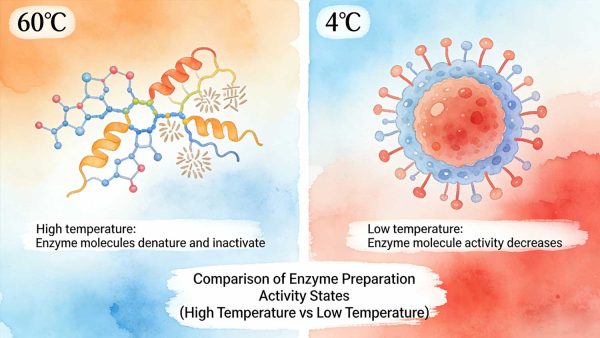
As a typical heat-sensitive bioactive material, enzyme preparations are widely used in feed, food, pharmaceutical, chemical and other industries. The traditional grinding process tends to cause reduced enzyme activity and denaturation due to frictional heat generation, which has become a common pain point in the industry. Cryogenic ultra-fine grinding technology, through full-process temperature control, inert protection and ultra-fine classification, can stably retain enzyme activity ≥98% while achieving fine particle size with D50 ≤10μm, making it the optimal solution for large-scale processing of enzyme preparations. Combined with real application cases, this article details the process, equipment, selection and implementation effects.
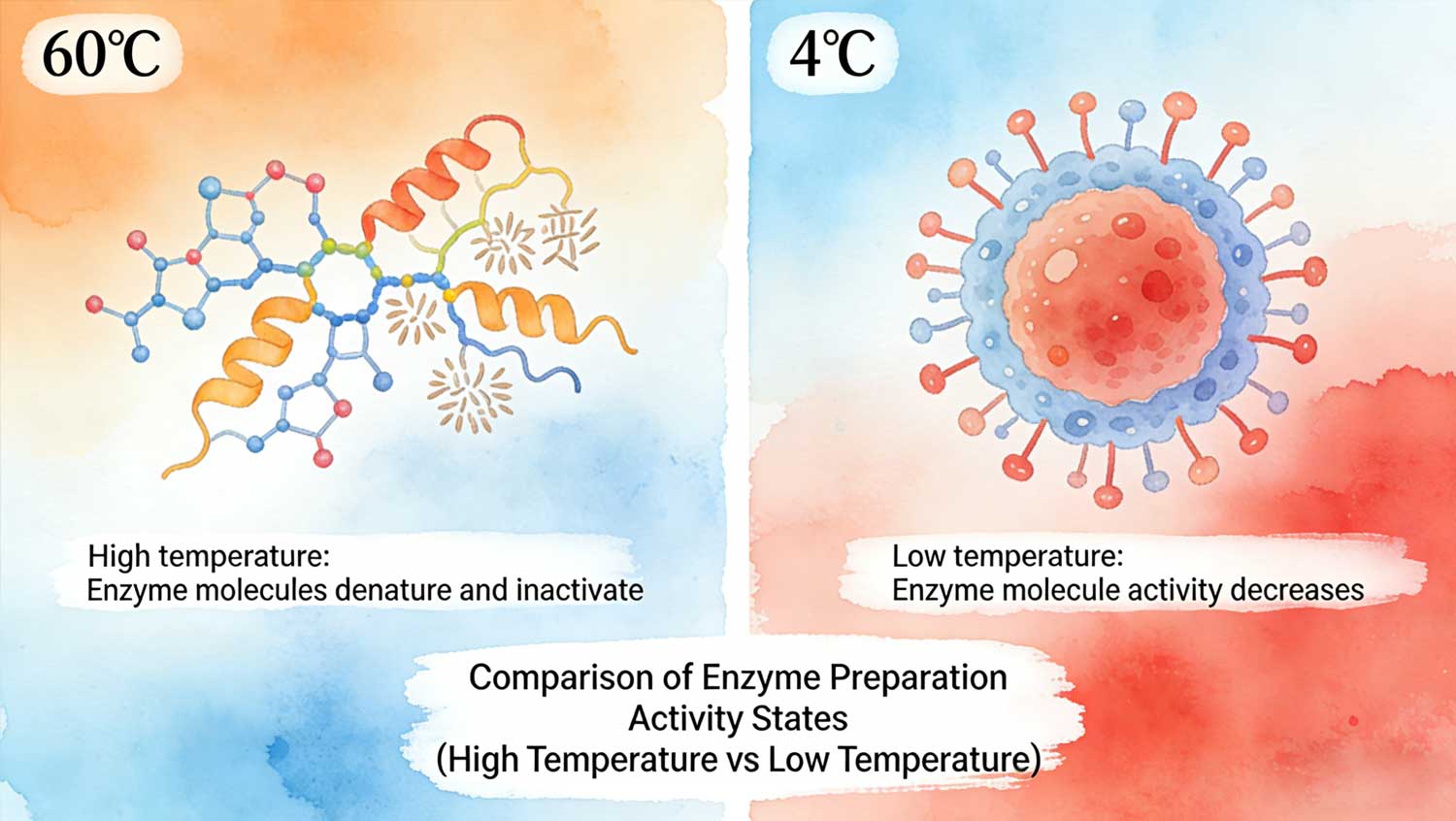
1. Core Pain Points of Enzyme Preparation Grinding
- Strong heat sensitivity: Easy to inactivate when the temperature exceeds 40℃, and activity decays rapidly above 50℃. The temperature rise of traditional mechanical grinding can reach 60–90℃.
- Easy oxidative deterioration: Oxidation when exposed to air, resulting in reduced potency and shortened shelf life.
- Wall sticking and material blocking: Some enzyme preparations contain sugar and protein, which are tough at room temperature and difficult to grind.
- High purity requirements: Metal contamination and dust leakage are prohibited, and food/pharmaceutical grade hygiene standards must be met.
2. Principle of Cryogenic Ultra-fine Grinding Technology (Suitable for Enzymes)
Cryogenic ultra-fine grinding focuses on temperature-controlled grinding + inert protection + high-precision classification to solve heat-sensitive problems:
- Low temperature control: Using liquid nitrogen/compressor refrigeration to stabilize the temperature of the grinding chamber at -10℃~25℃.
- Self-cooling mechanism: Jet grinding uses gas expansion to absorb heat, realizing “cooling while grinding”.
- Inert gas protection: Closed-loop operation with nitrogen to prevent oxidation, explosion and protect activity.
- No metal contamination: Ceramic lining and classifier wheel to avoid iron and chromium impurities mixing.
- Dynamic classification: Online particle size adjustment to prevent over-grinding and temperature rise.
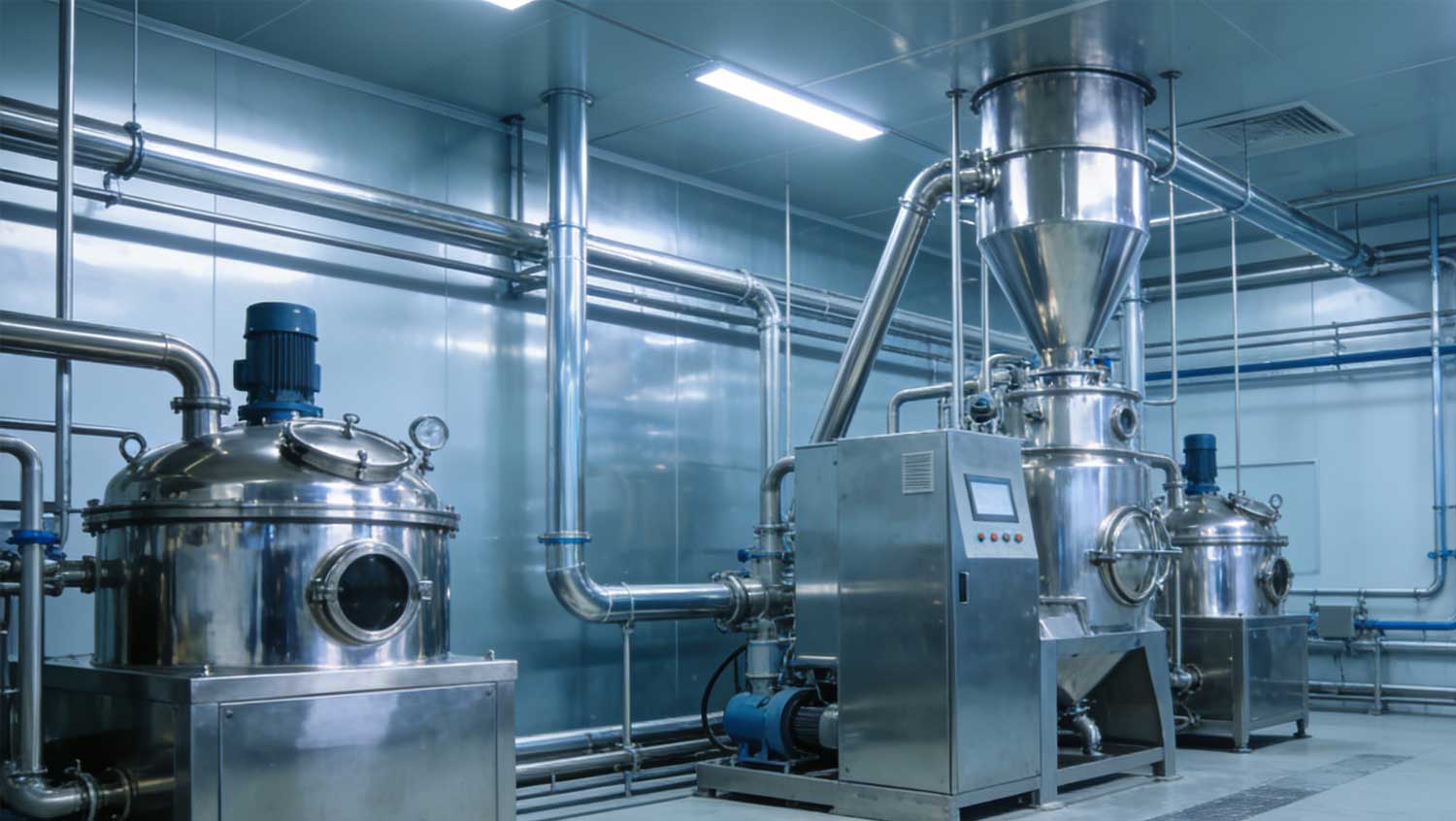
3. Complete Process Flow of Cryogenic Ultra-fine Grinding for Enzyme Preparations
- Pretreatment: Low-temperature drying of raw materials, moisture control ≤3% to improve brittleness for grinding.
- Pre-cooling: Pre-cooling materials and equipment chamber to the target temperature.
- Cryogenic grinding: Driven by inert gas, self-collision grinding in a low-temperature environment.
- High-precision classification: Online sorting by classifier to remove coarse particles and ensure uniform particle size.
- Collection and packaging: Negative pressure closed collection, discharging and rapid packaging in a low-temperature environment.
4. Real Case: Enzyme Preparation Grinding Project of a Biotechnology Company
1. Project Background
- Material: Compound feed enzyme preparations (amylase, protease, cellulase)
- Original process: Universal grinder, activity retention rate <85%, coarse particle size and wide distribution
- Requirements: Enzyme activity retention rate ≥97%, D50=5–15μm, food-grade hygiene, continuous production
2. Solution: Cryogenic Inert Protection Jet Ultra-fine Grinding System
- Refrigeration method: Liquid nitrogen cooling + jacket circulation refrigeration
- Control temperature: -5℃~15℃
- Grinding medium: High-purity nitrogen (anti-oxidation to protect enzyme activity)
- Contact material: 316L stainless steel + alumina ceramic lining
- Classification method: Horizontal high-precision classification, adjustable particle size
3. Implementation Effect (Actual Measurement Data)
- Enzyme activity retention rate: 98.2% (much higher than the industry average)
- Finished particle size: D50=8.6μm, narrow particle size distribution
- No metal contamination: Fe ion <1ppm, meeting food-grade requirements
- Capacity: 120–150kg/h, continuous and stable operation
- Compared with traditional processes: Enzyme activity loss reduced by more than 60%, finished product utilization increased by 15%
5. Grinding Parameter Recommendations for Different Types of Enzyme Preparations
- Food-grade enzymes (glucoamylase, lipase)
- Temperature: 0℃~20℃
- Material: 316L mirror polished, ceramic parts
- Protection: Nitrogen closed-loop circulation
- Feed enzymes (phytase, xylanase)
- Temperature: -5℃~25℃
- Configuration: Low temperature + explosion-proof + dustproof
- Pharmaceutical-grade enzymes (pancreatin, thrombolytic enzyme)
- Temperature: -10℃~10℃
- Requirements: GMP clean, inert protection, sterile design
6. Key Points of Equipment Selection
- Prioritize cryogenic jet mills: Self-cooling, low temperature rise, fine particle size.
- Must have closed-loop temperature control: Settable, recordable and alarmable.
- Inert gas protection: Essential for easily oxidized enzyme preparations.
- Hygienic design: Mirror polishing, no dead corners, easy CIP cleaning.
- Explosion-proof and dust removal: Meet safety specifications for organic powders.
7. Summary
The core contradiction of heat-sensitive materials such as enzyme preparations is ultra-fine grinding and high-temperature inactivation. Cryogenic ultra-fine grinding technology perfectly solves this contradiction through precise temperature control, inert protection and clean classification, achieving the unity of high activity, high fineness and high purity.
From practical cases, this solution can increase enzyme activity retention rate from 85% to over 98%, significantly improving product added value and market competitiveness. Enterprises are recommended to customize low-temperature, inert and clean ultra-fine grinding systems according to material characteristics, capacity and hygiene level to stably achieve large-scale and standardized production.