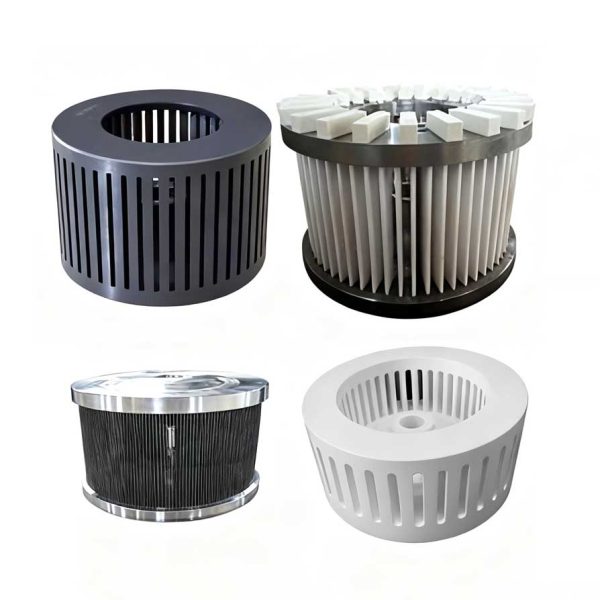
In powder processing equipment (such as jet mills and mechanical crushers), the classifier wheel is a core component that controls the particle size of finished products and ensures classification accuracy. The choice of material directly determines its wear resistance, service life, classification effect, and overall cost. The mainstream classifier wheel materials on the market include ceramics, tungsten carbide, stainless steel, and polyurethane, with significant differences in applicable scenarios for each material. Choosing the right material can reduce maintenance costs by more than 30%, while choosing the wrong one may lead to frequent replacements, product contamination, and other issues. This article will comprehensively analyze from the dimensions of material characteristics, applicable scenarios, and performance comparison to help you accurately select the optimal material.
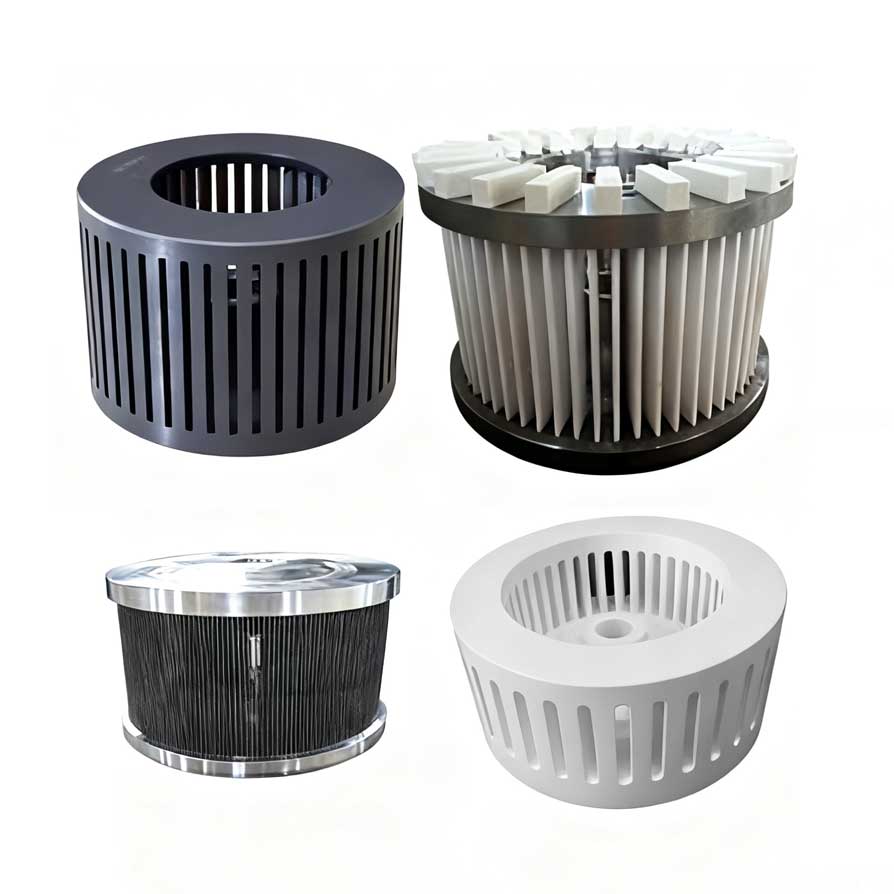
I. Detailed Explanation of Core Characteristics of Mainstream Classifier Wheel Materials
1. Ceramic Materials (Zirconia Ceramics / Alumina Ceramics): Preferred for High Purity + Moderate Wear Resistance
Represented by zirconia ceramics (ZrO₂) and alumina ceramics (Al₂O₃), ceramic classifier wheels are a popular choice for “high-purity demand” scenarios in powder processing.
- Core Characteristics: High hardness (Mohs hardness 8-9, second only to diamond); smooth and non-porous surface, no chemical reaction with materials, which can maximize the purity of powders (no metal impurity contamination); better wear resistance than ordinary metals, and light weight (density is only 1/3 of steel), resulting in lower energy consumption and less vibration during operation.
- Advantageous Scenarios:
- High-purity powder processing (such as pharmaceutical raw materials, electronic materials, food additives) to avoid metal ion contamination;
- Classification of medium and low-hardness materials (Mohs hardness ≤ 6, such as calcium carbonate, talc powder, traditional Chinese medicine powders);
- Processing of heat-sensitive materials (ceramics have low thermal conductivity, resulting in minimal temperature rise during operation, protecting material properties).
- Potential Limitations: High brittleness and poor impact resistance; if metal 硬块 or large impurities are mixed into the material, edge chipping and cracking are prone to occur; higher price than stainless steel, resulting in higher one-time purchase cost.
- Typical Applications: Classification of vitamins in the pharmaceutical industry, purification of quartz powder in the electronics industry, classification of milk powder/cocoa powder in the food industry.
2. Tungsten Carbide Materials (WC-Co Alloys): King of Super Wear Resistance + High Hardness
As the ultimate solution for classifying “high-hardness materials”, tungsten carbide classifier wheels are made by sintering tungsten carbide (WC) and cobalt (Co), with wear resistance far exceeding other materials.
- Core Characteristics: Extremely high hardness (Mohs hardness 9.5, close to diamond); wear resistance is 50-100 times that of stainless steel and 3-5 times that of ceramics; high compressive strength (up to 6000MPa or more), better impact resistance than ceramics; high temperature resistance (stable operation below 500℃), suitable for harsh working conditions.
- Advantageous Scenarios:
- Classification of high-hardness materials (Mohs hardness ≥ 7, such as diamond, silicon carbide, corundum, garnet);
- High-wear working conditions (such as waste rubber crushing, ore deep processing, abrasive powder classification);
- High-yield continuous production (strong wear resistance, long service life, reducing downtime for replacement).
- Potential Limitations: High price (2-3 times that of ceramics, 5-8 times that of stainless steel); high density (about 15g/cm³), resulting in slightly higher energy consumption during operation; contains metallic cobalt, which may pose a risk of trace contamination in some high-purity scenarios (such as electronic-grade powders).
- Typical Applications: Classification of silicon carbide micropowder in the abrasive industry, processing of granite powder in the ore industry, classification of lithium battery cathode materials (ternary materials) in the new energy industry.
3. Stainless Steel Materials (304/316L): Versatile + Low-Cost Basic Option
As the most common basic material for classifier wheels, stainless steel classifier wheels are mainly made of 304 stainless steel and 316L stainless steel, occupying the entry-level market with high cost-effectiveness and versatility.
- Core Characteristics: 304 stainless steel has corrosion resistance, easy processing, and low cost; 316L stainless steel has better acid and alkali resistance and corrosion resistance, suitable for corrosive materials; good toughness, strong impact resistance, not easy to crack; surface can be polished to reduce material adhesion.
- Advantageous Scenarios:
- Classification of medium and low-hardness materials without strong corrosion (such as limestone, gypsum, chemical fertilizers, feed);
- Processing of industrial powders with low purity requirements (such as construction powder, ordinary coating raw materials);
- Small and medium-sized enterprises with limited budgets and intermittent production scenarios.
- Potential Limitations: General wear resistance; fast wear when dealing with high-hardness materials (service life is only 1/3 of ceramics and 1/10 of tungsten carbide); surface rust may occur after long-term use, affecting classification accuracy.
- Typical Applications: Classification of limestone powder in the construction materials industry, processing of feed additives in the agricultural industry, classification of ordinary pigments in the chemical industry.
4. Polyurethane Materials (PU): Specialized Option for Impact Resistance + Anti-Adhesion
Polyurethane classifier wheels belong to non-metallic flexible materials, adapting to specific scenarios with their unique elasticity and anti-adhesion properties.
- Core Characteristics: Good elasticity and excellent impact resistance (not easy to be damaged by material impact); hydrophobic surface, not easy to adhere to wet materials (such as coal slime, talc powder); light weight, low operating noise; chemical corrosion resistance (resistant to acids, alkalis, and organic solvents).
- Advantageous Scenarios:
- Classification of wet and sticky materials (such as wet coal, bentonite, starch);
- Classification of brittle materials (such as glass powder, phenolic resin, to avoid excessive material crushing);
- Scenarios sensitive to equipment vibration (flexible materials can buffer vibration).
- Potential Limitations: General wear resistance (lower than ceramics and tungsten carbide), short service life; poor high-temperature resistance (long-term operating temperature not exceeding 80℃), not suitable for high-temperature working conditions.
- Typical Applications: Classification of wet coal in the coal industry, processing of sticky resin powders in the chemical industry, classification of bentonite in the construction materials industry.
II. Performance Comparison Table of Classifier Wheel Materials (Choose Materials at a Glance)
| Comparison Dimension | Ceramics (Zirconia / Alumina) | Tungsten Carbide (WC-Co) | Stainless Steel (304/316L) | Polyurethane (PU) |
| Mohs Hardness | 8-9 | 9.5 | 5.5-6 | 2-3 |
| Wear Resistance | ★★★★☆ | ★★★★★ | ★★★☆☆ | ★★★☆☆ |
| Impact Resistance | ★★☆☆☆ | ★★★★☆ | ★★★★☆ | ★★★★★ |
| Purity Assurance (No Contamination) | ★★★★★ | ★★★☆☆ | ★★★☆☆ | ★★★★☆ |
| High-Temperature Resistance | ★★★★☆ (≤800℃) | ★★★★☆ (≤500℃) | ★★★★☆ (≤600℃) | ★★☆☆☆ (≤80℃) |
| One-Time Purchase Cost | ★★★☆☆ (Medium-High) | ★★★★★ (Extremely High) | ★★☆☆☆ (Low) | ★★★☆☆ (Medium) |
| Total Operating Cost | ★★★☆☆ (Medium) | ★★★☆☆ (Medium, Long Service Life) | ★★★☆☆ (High, Frequent Replacements Needed) | ★★★☆☆ (High, Short Service Life) |
| Suitable Material Hardness | Medium-Low Hardness (≤6) | High Hardness (≥7) | Medium-Low Hardness (≤5) | Medium-Low Hardness (≤4) |
III. How to Choose the Best Classifier Wheel Material? 4-Step Accurate Selection
1. Step 1: Clarify the Core Characteristics of the Material
- Material Hardness: Mohs hardness ≥ 7 (such as silicon carbide, corundum) → Tungsten carbide is preferred; Mohs hardness ≤ 6 (such as calcium carbonate, traditional Chinese medicine) → Ceramics / Stainless steel / Polyurethane;
- Material Purity Requirement: Electronic-grade, pharmaceutical-grade, food-grade powders → Ceramics (no metal contamination); Industrial-grade ordinary powders → Stainless steel / Polyurethane;
- Material Humidity / Stickiness: Wet and sticky → Polyurethane; Dry and non-sticky → Ceramics / Tungsten carbide / Stainless steel;
- Material Corrosiveness: Strong acid / strong alkali environment → 316L stainless steel / Polyurethane; No corrosion → Any material.
2. Step 2: Judge Based on Working Conditions
- Production Scale: Large-scale continuous production → Tungsten carbide / Ceramics (long service life, reducing downtime); Small-scale intermittent production → Stainless steel (low cost);
- Operating Temperature: High-temperature working conditions (>200℃) → Ceramics / Tungsten carbide / Stainless steel; Low-temperature working conditions (<80℃) → Polyurethane is optional;
- Impurity Condition: Materials containing hard blocks or metal impurities → Stainless steel / Polyurethane (impact resistance); Pure materials without impurities → Ceramics / Tungsten carbide.
3. Step 3: Calculate the Total Cost (Not Just the Purchase Price)
- Purchase Cost: Stainless steel < Polyurethane < Ceramics < Tungsten carbide;
- Maintenance Cost: Tungsten carbide (long service life, less maintenance) < Ceramics < Stainless steel < Polyurethane;
- Total Cost Formula: (Purchase Price ÷ Service Life) + Annual Maintenance Downtime Loss;
- Example: For large-scale production of high-hardness materials, although tungsten carbide has a high purchase price, its service life is 10 times that of stainless steel, resulting in lower total cost.
4. Step 4: Refer to Mature Industry Cases
- Pharmaceutical / Food Industry: 90% choose ceramic materials (to ensure purity);
- Abrasive / Ore Industry: 80% choose tungsten carbide materials (super wear resistance);
- Construction Materials / Feed Industry: 70% choose stainless steel materials (high cost-effectiveness);
- Coal / Sticky Material Industry: 60% choose polyurethane materials (anti-adhesion, impact resistance).
IV. Guide to Avoid Common Selection Mistakes
1. Mistake 1: Only Focus on Purchase Price, Ignoring Service Life → For example, choosing stainless steel to process high-hardness materials to save money, but having to replace it monthly, resulting in higher total cost than ceramics;
2. Mistake 2: Blindly Pursue High Hardness, Ignoring Impact Resistance → For example, using ceramic materials for materials containing impurities, leading to frequent edge chipping and replacements;
3. Mistake 3: Ignoring Purity Requirements, Choosing Tungsten Carbide / Stainless Steel for High-Purity Scenarios → Leading to excessive metal impurities in powders and product scrapping;
4. Mistake 4: Choosing Polyurethane for High-Temperature Working Conditions → Leading to material deformation and loss of classification accuracy.
Conclusion
The core logic of classifier wheel material selection is “adaptation” — there is no best material, only the most suitable scenario. For high-purity, medium-low hardness materials, ceramics are preferred; for high-hardness, high-wear working conditions, tungsten carbide is the choice; for ordinary industrial powders with limited budgets, stainless steel is suitable; for wet and sticky materials, polyurethane is the direct option.
If you still have doubts about selection, you can leave a message to inform your material hardness, purity requirements, production scale, and working temperature, and we will provide you with targeted material recommendations and selection plans!