In the fields of non-metallic minerals, new energy, medicine, chemicals, and advanced materials, ultrafine powder has become a core raw material due to its excellent surface activity, large specific surface area, and unique physical and chemical properties. However, a single ultrafine grinding technology often faces bottlenecks such as poor powder dispersibility, easy agglomeration, and single functionality, which severely limits the expansion of its application scenarios. The organic combination of ultrafine grinding and coating technology realizes the “physical optimization + chemical modification” dual effect, not only solving the inherent defects of ultrafine powder, but also endowing it with new functional characteristics, thus breaking through the application limitations and promoting the high-value utilization of powder materials. This article focuses on the technical principle, synergy, application scenarios and industry cases of the combination of ultrafine grinding and coating technology, providing practical references for enterprises to expand powder application boundaries and enhance core competitiveness.
I. Core Principle: The Synergy of Ultrafine Grinding and Coating Technology
Ultrafine grinding and coating technology are not independent of each other, but form a complementary and synergistic technical system. Ultrafine grinding lays a physical foundation for coating, and coating optimizes the functional performance of ultrafine powder, forming a “1+1>2” application effect. To understand their combined value, we first clarify their core principles and synergy mechanisms.
(I) Core Functions of the Two Technologies
-
Ultrafine Grinding Technology: As the core of powder physical modification, it uses mechanical force (impact, shear, friction) or non-mechanical force (airflow, ultrasonic) to crush raw materials into ultrafine powder with a particle size of micron or nanometer level. Its core role is to reduce the particle size of the powder, narrow the particle size distribution, increase the specific surface area, and improve the surface activity of the powder, laying a foundation for the uniform coating of the subsequent coating layer. Common ultrafine grinding technologies include airflow grinding, mechanical ball milling, and ultrasonic grinding, among which airflow grinding is widely used in high-precision powder processing due to its uniform particle size and low pollution.
-
Coating Technology: Also known as surface modification technology, it deposits a layer or multiple layers of coating materials (organic, inorganic, or composite materials) on the surface of ultrafine powder particles through physical, chemical, or physicochemical methods to form a stable core-shell structure. Its core role is to solve the defects of ultrafine powder such as easy agglomeration, poor stability, and poor compatibility, and at the same time endow the powder with new functions such as corrosion resistance, wear resistance, and hydrophilicity/hydrophobicity, expanding its application scope.
(II) Synergy Mechanism: Complementary Advantages and Effect Multiplication
The combination of the two technologies breaks the limitations of a single technology, and the synergy is mainly reflected in two aspects:
-
Ultrafine grinding provides favorable conditions for coating: After ultrafine grinding, the powder particle size is reduced, the specific surface area is increased, and the surface activity is enhanced, which makes the coating material easier to adsorb, deposit, and bond on the powder surface, ensuring the uniformity and compactness of the coating layer. If the powder particle size is too large or the particle size distribution is uneven, the coating layer will be uneven, easy to fall off, and the modification effect will be greatly reduced. For example, in the production of titanium dioxide, ultrafine grinding controls the D50 particle size in the range of 0.3-0.5 microns, which ensures the uniform deposition of the coating layer and improves the coating effect.
-
Coating makes up for the defects of ultrafine powder: Ultrafine powder has high surface energy and is prone to agglomeration, which affects its application effect. The coating layer can form a “protective film” on the surface of the powder, reduce the surface energy of the particles, prevent agglomeration, and improve the dispersibility and stability of the powder. At the same time, the coating material can also make up for the functional deficiencies of the original powder. For example, metal ultrafine powder is easy to oxidize. After being coated with oxide, its oxidation resistance can be significantly improved, and its service life can be extended.
In short, ultrafine grinding determines the “basic performance” of the powder (particle size, specific surface area), and coating determines the “functional performance” of the powder (stability, compatibility, new functions). The combination of the two can maximize the value of the powder and expand its application scenarios from traditional fields to high-end and multi-functional fields.
II. Common Combination Processes of Ultrafine Grinding and Coating Technology
According to the different sequence of ultrafine grinding and coating, and the type of coating materials, there are three common combination processes in the industry, which are suitable for different powder types and application requirements. Enterprises can choose the appropriate process according to their own needs.
(I) Pre-grinding and Post-coating Process (Most Common)
Process flow: Raw material pretreatment → Ultrafine grinding → Coating modification → Drying → Sieving → Finished product. This process is suitable for most powder materials, especially those with high hardness and uneven particle size (such as quartz, talc, calcium carbonate). The core advantage is that the powder is first ground to the required fineness, and then coated, which can ensure the uniformity of the coating layer and avoid the damage of the coating layer caused by grinding after coating.
Application cases: In the production of ultrafine calcium carbonate powder, the raw material is first crushed into ultrafine powder with a particle size of 1000-5000 mesh by airflow grinding, and then coated with stearic acid. The modified calcium carbonate has good dispersibility and compatibility, and can be widely used in plastic, rubber, and coating fields to improve the mechanical properties of products.
(II) In-situ Coating Process (Efficient and Energy-saving)
Process flow: Raw material pretreatment → Ultrafine grinding + in-situ coating → Drying → Finished product. This process integrates ultrafine grinding and coating into one step. During the grinding process, the coating material is added to the grinding cavity, and the coating reaction is completed while grinding with the help of mechanical force and surface energy generated by grinding. It has the advantages of short process, low energy consumption, and tight combination of coating layer and powder particles.
Application cases: In the preparation of lithium slag micro-nano composite pigments, the lithium slag is first subjected to magnetic separation pretreatment, then ultrafine ground to 800-12500 mesh, and the coating modifier is added to the grinding cavity for in-situ coating. The prepared composite pigment has good dispersibility and can be used in coatings, rubber, and plastic fields, realizing the high-value utilization of lithium slag.
(III) Multi-layer Coating Process After Grinding (High-end Functional Powder)
Process flow: Raw material pretreatment → Ultrafine grinding → Primary coating → Secondary coating → Drying → Finished product. This process is suitable for high-end functional powder (such as new energy battery materials, pharmaceutical powder, electronic materials). By coating multiple layers of different materials, the powder is given multiple functional characteristics to meet the high requirements of special application scenarios.
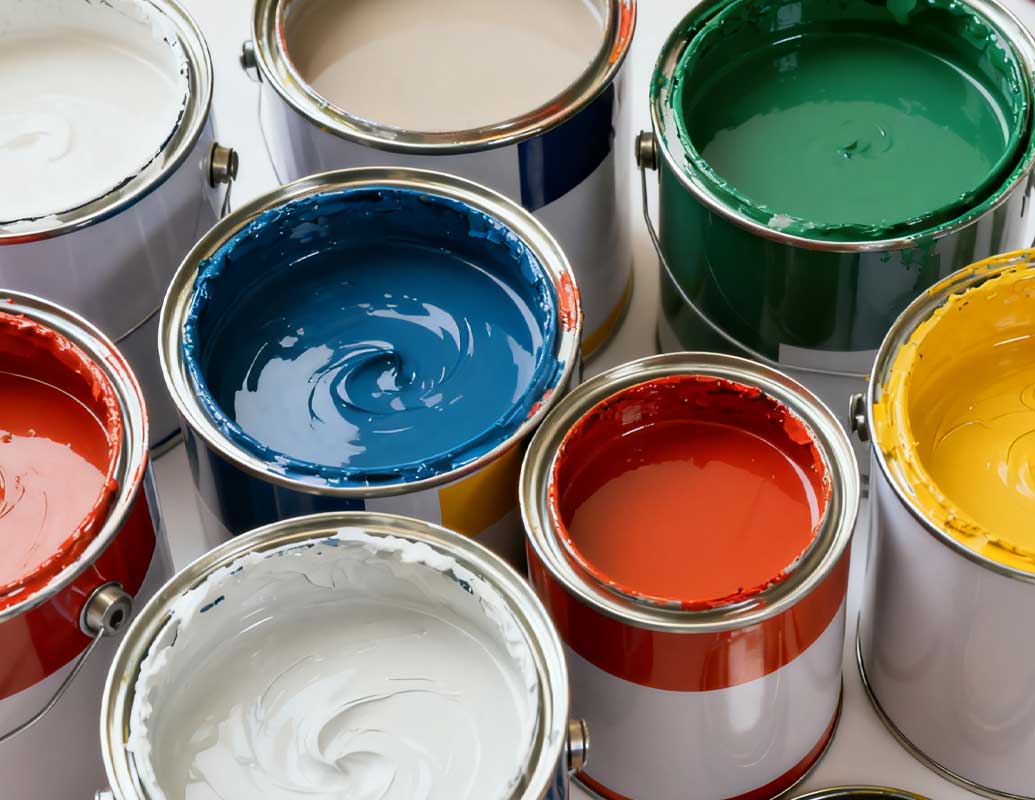
Application cases: In the production of high-end titanium dioxide, after ultrafine grinding, a multi-layer coating is carried out: the ZrO₂ layer improves weather resistance and anti-chalking ability, the Al₂O₃ layer enhances dispersibility and binding force with resin, and the SiO₂ layer optimizes chemical stability. The modified titanium dioxide has excellent weather resistance and whiteness, and is widely used in outdoor coatings, automotive exterior parts, and other fields.
III. Application Scenarios Expanded by the Combination of the Two Technologies
The combination of ultrafine grinding and coating technology has broken the application limitations of traditional ultrafine powder, and has been widely used in non-metallic minerals, new energy, medicine, food, and other fields. The following are typical application scenarios, highlighting the practical value of the technology combination.
(I) Non-metallic Mineral Field: High-value Utilization of Traditional Powder
Traditional non-metallic mineral powder (quartz, talc, kaolin) has single functionality and low added value. After the combination of ultrafine grinding and coating technology, its performance is greatly optimized, and it is extended from traditional building materials to high-end fields:
-
Quartz powder: After ultrafine grinding to 5000 mesh or more, it is coated with silicone resin. The modified quartz powder has good heat resistance and insulation, and is used in semiconductor packaging, electronic circuit boards, and other fields, solving the problem of poor compatibility between traditional quartz powder and organic materials.
-
Talc powder: After ultrafine grinding and stearic acid coating, it has good lubricity and dispersibility, and is used in plastic injection molding, cosmetic fillers, and other fields. It can improve the processing performance of plastic products and the smoothness of cosmetic products.
(II) New Energy Field: Optimizing Key Material Performance
New energy fields (lithium batteries, solar cells) have high requirements for powder materials. The combination of ultrafine grinding and coating technology has become a key means to improve the performance of new energy materials:
-
Lithium battery cathode materials: The ternary material or lithium iron phosphate is ultrafinely ground to nanometer level, and then coated with Al₂O₃, ZrO₂, or other materials. The modified cathode material has good cycle stability and high temperature resistance, which can improve the energy density and service life of lithium batteries.
-
Solar cell materials: The titanium dioxide powder is ultrafinely ground and coated with conductive materials (such as graphene). The modified powder has good photoelectric conversion efficiency and is used in the preparation of solar cell electrodes, improving the power generation efficiency of solar cells.
(III) Pharmaceutical and Food Field: Ensuring Safety and Functionality
In the pharmaceutical and food fields, the safety and functionality of powder materials are strictly required. The combination of ultrafine grinding and coating technology can effectively solve the problems of poor solubility and easy oxidation of traditional powder:
-
Pharmaceutical powder: The drug particles are ultrafinely ground to nanometer level, and then coated with enteric coating materials (such as hydroxypropyl methylcellulose). The coated drug can achieve targeted release in the intestinal tract, improve the bioavailability of the drug, and reduce side effects.
-
Food additives: The ultrafine grinding of functional powder (such as dietary fiber, probiotics) and coating with hydrophilic materials can improve the solubility and stability of the powder, which is convenient for adding to beverages, dairy products, and other foods, and enhances the nutritional value of food.
(IV) Advanced Materials Field: Developing Multi-functional Composite Powder
In the field of advanced materials, the combination of ultrafine grinding and coating technology is an important way to develop multi-functional composite powder:
-
Ceramic powder: The alumina powder is ultrafinely ground and coated with silicon carbide. The modified ceramic powder has high hardness and wear resistance, and is used in the preparation of high-precision ceramic parts, which are applied in aerospace, precision manufacturing, and other fields.
-
Magnetic powder: The iron oxide magnetic powder is ultrafinely ground and coated with fluorescent materials. The composite powder has both magnetic and fluorescent properties, and is used in biological imaging, magnetic separation, and other fields, expanding the application of magnetic materials.
IV. Industry Case: Practice of Combining Ultrafine Grinding and Coating Technology
A large titanium chemical enterprise (Ming Sheng Titanium Chemical) faced the industry problem that titanium dioxide was difficult to balance “high whiteness” and “weather resistance”. By combining ultrafine grinding and multi-layer coating technology, the enterprise successfully solved the problem and achieved product upgrading, which has important reference significance for similar enterprises:
1. Technical selection: The enterprise adopted the “airflow grinding + multi-layer coating” combination process. First, the titanium dioxide raw material was ultrafinely ground by airflow grinding, and the D50 particle size was accurately controlled in the range of 0.3-0.5 microns, and the particle size distribution span (SPAN value) was less than 1.2, which laid a foundation for uniform coating. Then, a multi-layer coating was carried out, and ZrO₂, Al₂O₃, and SiO₂ were used as coating materials to form a dense protective layer on the surface of titanium dioxide particles.
2. Application effect: After modification, the whiteness (L* value) of titanium dioxide was increased to more than 97%, the hiding power was enhanced by 20%-30%, and the weather resistance (QUV-A test) exceeded 1200 hours, far higher than the industry average of 800 hours. The modified titanium dioxide was widely used in high-quality coatings, automotive exterior parts, and ship anti-corrosion fields, and the product added value was increased by 40% compared with the traditional product. At the same time, the enterprise realized the seamless connection of the two technologies through the intelligent control system, and the performance fluctuation error of each batch of products was controlled within ±2%.
Another case: A lithium slag processing enterprise adopted the “ultrafine grinding + in-situ coating” process to prepare micro-nano composite pigments. The lithium slag was first subjected to magnetic separation pretreatment, then ultrafinely ground to 800-12500 mesh, and the coating modifier was added to the grinding cavity for in-situ coating. The prepared composite pigment had good dispersibility and compatibility, and could be used in coatings, rubber, and plastic fields, realizing the green and high-value utilization of lithium slag, and the production process was environmentally friendly without three wastes emission.
V. Key Points for Selecting the Combination Process and Industry Suggestions
The effect of combining ultrafine grinding and coating technology is closely related to the selection of process, equipment, and coating materials. Enterprises need to pay attention to the following key points to avoid blind investment and ensure the application effect:
(I) Key Selection Points
-
Adapt to raw material characteristics: For hard and brittle materials (quartz, alumina), choose airflow grinding or mechanical ball milling; for soft materials (talc, graphite), choose high-speed shearing grinding. The coating material should be matched with the powder properties. For example, corrosive powder should choose corrosion-resistant coating materials (such as fluorine-containing compounds), and hydrophilic powder should choose hydrophilic coating materials (such as polyethylene glycol).
-
Combine with application requirements: If the product requires high dispersibility (such as plastic fillers), choose the pre-grinding and post-coating process; if the product requires multi-functional characteristics (such as new energy battery materials), choose the multi-layer coating process after grinding; if energy saving and efficiency improvement are required, choose the in-situ coating process.
-
Pay attention to equipment matching: The ultrafine grinding equipment and coating equipment should be matched in terms of production capacity and precision. For example, the in-situ coating process needs to choose grinding equipment that can add coating materials online to ensure the uniformity of the coating layer. At the same time, intelligent control systems can be introduced to realize the seamless connection of the two technologies and improve production stability.
(II) Industry Suggestions
1. Attach importance to technological innovation: With the development of high-end fields such as new energy and semiconductors, the requirements for powder materials are becoming more and more strict. Enterprises should increase R&D investment, optimize the combination process of ultrafine grinding and coating, and develop customized products according to downstream needs to enhance market competitiveness.
2. Strengthen the research on coating materials: The performance of coating materials directly determines the modification effect. Enterprises should focus on the research and development of environmentally friendly, high-performance coating materials (such as bio-based coating materials, composite coating materials) to meet the requirements of green development and high-end applications.
3. Promote the integration of intelligence: Introduce intelligent control systems to realize real-time monitoring and adjustment of grinding parameters, coating dosage, and other parameters, improve production efficiency and product stability, and reduce manual operation errors. At the same time, promote the integration of ultrafine grinding and coating equipment to realize continuous production and reduce production costs.
VI. Summary
The combination of ultrafine grinding and coating technology is an important direction for the development of the powder processing industry. It solves the inherent defects of single ultrafine powder, endows the powder with new functional characteristics, and expands the application scenarios of the powder from traditional building materials, chemicals, and other fields to high-end fields such as new energy, semiconductors, and biomedicine. The synergy of the two technologies not only improves the product quality and added value, but also promotes the high-value utilization of resources (such as lithium slag) and the green development of the industry.
In the future, with the continuous progress of technology, the combination of ultrafine grinding and coating technology will tend to be more intelligent, efficient, and environmentally friendly. More new combination processes and coating materials will be developed, which will inject new vitality into the development of the powder industry. For enterprises, seizing the opportunity of technological integration, choosing the appropriate combination process, and strengthening technological innovation are the key to breaking through the application bottleneck and achieving high-quality development.