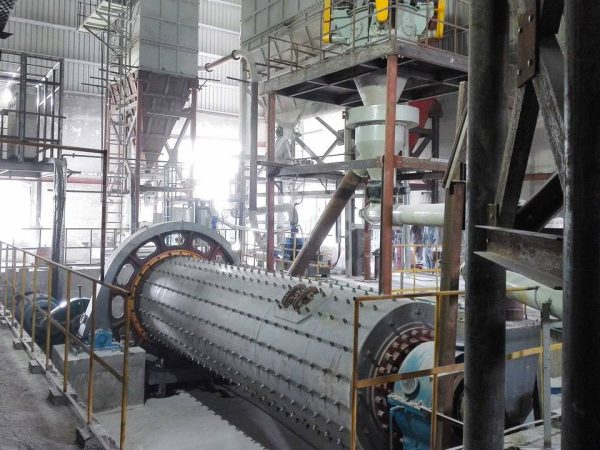
In the quartz deep processing industry, the fineness and particle size uniformity of ultrafine powder directly determine the product added value. However, the traditional production mode of separate ball mill grinding and classification often leads to pain points such as high energy consumption, low productivity, and insufficient product qualification rate, which have become the core bottleneck restricting enterprise development. Taking a large quartz processing enterprise (hereinafter referred to as “the enterprise”) as an example, this article details the application process of the ball mill ultrafine grinding + classification integration system, shares practical experience in process optimization, provides a replicable upgrading plan for similar quartz enterprises, and helps enterprises reduce costs, increase efficiency, and enhance core competitiveness.
I. Original Production Pain Points of the Enterprise: Traditional Mode Cannot Meet High-End Demands
The enterprise is mainly engaged in quartz sand deep processing, and its products are widely used in semiconductor packaging, copper-clad laminates, high-end ceramics and other fields. The original production process adopted the “single ball mill grinding + offline classification” mode. With the increasing requirements of downstream customers for quartz powder fineness (requiring D50≤5μm, D97≤15μm) and particle size stability, the drawbacks of the original process have become increasingly prominent, mainly focusing on the following 4 points:
-
Disconnection between grinding and classification, insufficient product precision: After ball mill grinding, the materials need to be transported to the classification equipment through conveying equipment. During the process, material agglomeration and uneven particle size are prone to occur, resulting in large deviation in classification precision. The fluctuation range of product D50 reaches ±5μm, which does not meet the strict requirements of high-end customers for quartz powder. The qualification rate is only about 78%, and a large number of unqualified materials need to be reworked and reground, wasting manpower and material resources.
-
High energy consumption and high production cost: The traditional ball mill equipment has not optimized the length-diameter ratio and grinding medium ratio, resulting in over-grinding. The power consumption per unit product reaches 85kWh/t; at the same time, offline classification requires additional investment in auxiliary equipment such as conveying and drying, with poor equipment linkage. The overall energy consumption is more than 30% higher than the advanced level of the industry, which greatly compresses the enterprise’s profit space.
-
Low production efficiency and prominent productivity bottleneck: The grinding and classification links operate independently, the intermediate transportation link takes a long time, and the coarse particles after classification need to be manually returned to the ball mill for regrinding, with low automation. The daily output of a single production line is only 20 tons, which is difficult to meet the bulk order demand of downstream customers, resulting in serious order backlog.
-
Environmental protection and operational hazards, high compliance pressure: Dust overflow is prone to occur during material transportation, and the dust emission exceeds the environmental protection standard (higher than 10mg/cubic meter); at the same time, there are many manual operation links, which are prone to operational errors, which not only affect product quality but also have certain potential safety hazards, making it difficult to meet the requirements of ISO9001 quality system and environmental protection compliance.
To solve the above pain points and enhance product competitiveness, the enterprise decided to introduce a ball mill ultrafine grinding + classification integration system after extensive research and comparison, to comprehensively optimize and upgrade the original production process, focusing on the four core goals of “precision grinding, efficient classification, energy saving and consumption reduction, and environmental protection compliance”, and realize the quality improvement, efficiency increase and cost reduction of the entire production process.
II. Optimization Plan: Landing Application of Ball Mill Ultrafine Grinding + Classification Integration System
Taking “integrated linkage, intelligent control and refined regulation” as the core, this process optimization abandons the traditional offline classification mode, adopts the ball mill ultrafine grinding and self-splitting micro-powder classification integration equipment, integrates the entire links of raw material pretreatment, grinding, classification, collection, reflux, etc., and combines process parameter optimization to realize closed-loop control of the production process. The specific optimization measures are as follows:
(I) Equipment Upgrade: Introduce Integrated Core Equipment to Realize Linkage Operation
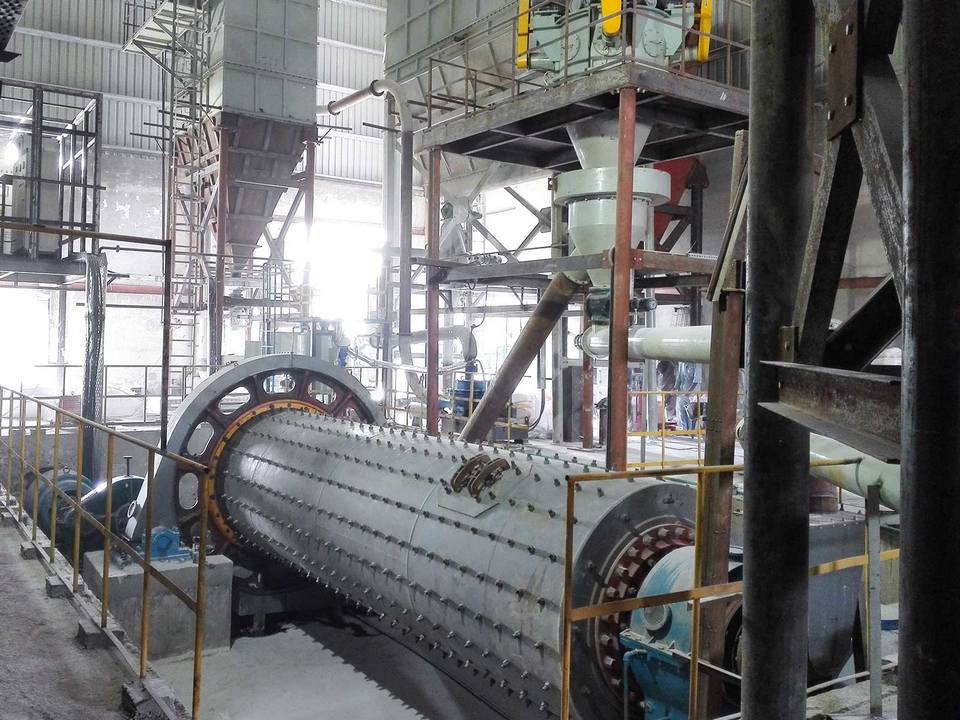
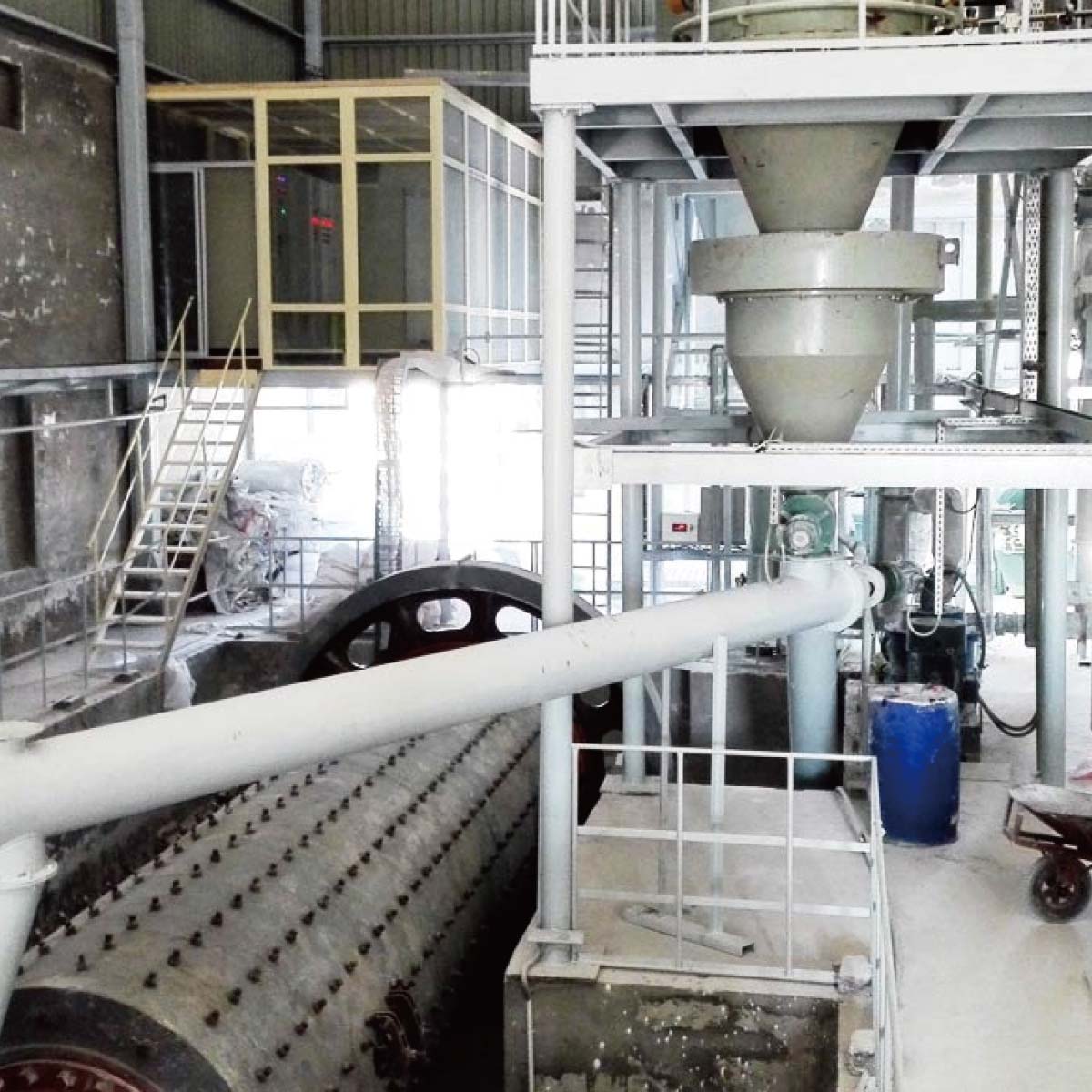
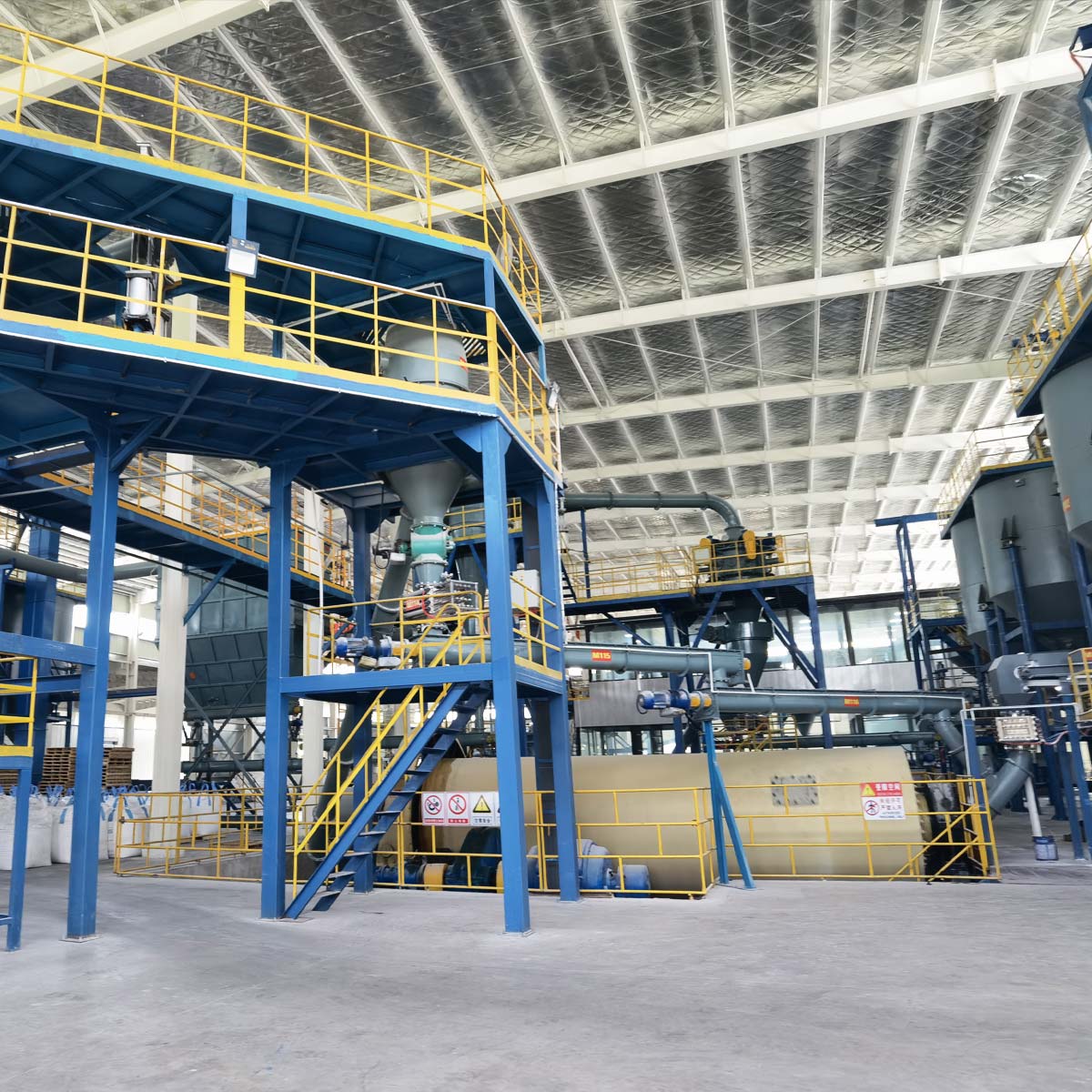
The enterprise eliminated the original old ball mill and classification equipment, and introduced a set of JBM2400 type ball mill ultrafine grinding + classification integration production line. The core equipment includes optimized ultrafine ball mill, multi-rotor classifier, PLC intelligent control system, environmental protection dust collection system, etc., realizing the integrated linkage of “grinding – classification – reflux – collection”. The specific equipment advantages are as follows:
-
Optimized design of ultrafine ball mill: Optimize the length-diameter ratio of the ball mill to improve output and fine powder rate and avoid over-grinding; the grinding chamber and opening size are precisely designed to ensure smooth feeding and discharging without additional cooling pipes; select liners and grinding media that meet German standards. According to the characteristics of quartz materials, a multi-level medium ratio of “Φ20mm:Φ10mm:Φ5mm=5:3:2” is adopted to enhance the impact crushing and grinding effect, extend the service life of grinding media, and reduce the wear rate.
-
Precise grading of multi-rotor classifier: Adopt a vertical turbo classifier derived from German technology, equipped with a frequency conversion control system, which can accurately adjust the classification parameters, with a classification precision of D97≤2μm and accurate cutting point; optimize the structure of the classifier to make the material and air flow path more reasonable, the classification air volume adjustable, the fine powder extraction rate 50% higher than that of the traditional classifier, and can produce products of multiple particle sizes at the same time to adapt to different customer needs.
-
Linkage control of intelligent control system: Adopt Siemens S7-1500 PLC control system, equipped with a touch screen man-machine interface, which can real-time monitor key parameters such as ball mill speed, grinding medium filling rate, classification wind speed, and material humidity, and realize automatic adjustment; the silo is equipped with a high-quality level indicator to ensure full automatic control of the production process and reduce human operation errors.
-
Upgrade of environmental protection system: The whole system adopts negative pressure flow field design, equipped with high-efficiency bag filter, the dust collection efficiency is ≥99.9%, the dust emission is less than 1mg/cubic meter, meeting European environmental protection requirements; at the same time, it is equipped with silencing device and shock absorber, and the equipment operation noise is controlled within 80dB(A), realizing clean production.
(II) Process Optimization: Full-Process Refined Regulation to Improve Product Quality and Efficiency
On the basis of equipment upgrading, combined with the characteristics of quartz materials (high hardness and high purity requirements), the enterprise has optimized the entire production process, focusing on solving the problems in key links such as raw material pretreatment, parameter regulation, and additive addition:
-
Optimization of raw material pretreatment: Add a raw material pretreatment link, conduct coarse crushing, magnetic separation, cleaning and drying treatment on quartz ore to ensure that the feed particle size D80≤5mm and water content <1.5%; remove impurities and metal particles in the raw materials to increase the purity of quartz raw materials to more than 99.9%, avoiding impurities affecting product quality and equipment wear.
-
Precise regulation of grinding parameters: Through multiple tests, optimize the ball mill speed and grinding medium filling rate, increase the ball mill speed from 60% critical speed to 75% to ensure the maximum falling kinetic energy of the grinding medium; control the grinding medium filling rate at about 35% to avoid excessive filling rate compressing the impact space and improve grinding efficiency; at the same time, adopt a precise quantitative feeding system to ensure stable feeding even if the feed density changes, ensuring grinding uniformity.
-
Dynamic adaptation of classification parameters: According to the downstream customers’ requirements for quartz powder fineness, adjust the classifier speed and air flow speed through frequency conversion control. For the core products with D50=5μm and D97=15μm, set the optimal classification parameters to reduce the product particle size deviation to ±1.5μm; the coarse particles after classification are automatically returned to the ball mill through pipelines for secondary grinding, forming a closed loop, reducing material waste and improving raw material utilization rate.
-
Scientific addition of grinding aids: Use a high-precision metering pump to quantitatively inject 0.2% triethanolamine grinding aid, reduce the surface energy of quartz materials, improve grinding efficiency and product performance stability, shorten grinding time by 35%, and reduce power consumption per unit product.
(III) Process Integration: Simplify Links to Realize Full Closed-Loop Efficient Production
The optimized production process completely abandons the cumbersome links of traditional offline classification, forming a full closed-loop process of “raw material pretreatment → ultrafine grinding → online classification → finished product collection → coarse material reflux”. The specific process is as follows:
1. After coarse crushing, magnetic separation, cleaning and drying, the quartz ore is sent to the feed silo of the integrated system by lifting and conveying equipment; 2. The feed silo uniformly sends the pretreated raw materials to the ultrafine ball mill through the quantitative feeding system, and realizes ultrafine grinding under the impact and grinding action of the grinding medium; 3. The crushed materials directly enter the multi-rotor classifier through the discharge silo to realize the separation of coarse and fine powder. The qualified fine powder (meeting customer fineness requirements) is collected by the collector and completed by the automatic packaging system; 4. The coarse particles after classification are automatically returned to the ball mill through the pipeline at the lower end of the classifier for secondary grinding, forming a closed-loop cycle; 5. During the entire production process, the PLC control system real-time monitors the parameters of each link, automatically adjusts the speed, air volume, feeding amount, etc., to ensure stable production; 6. A small amount of dust generated during the production process is collected and treated by the environmental protection dust collection system, and the purified gas is discharged by the induced draft fan to realize clean production.
III. Optimization Effect: Significant Cost Reduction and Efficiency Increase, Greatly Improved Product Competitiveness
Three months after the ball mill ultrafine grinding + classification integration system of the enterprise was put into operation, the production process became stable, and various indicators met the expected goals. Compared with the original production mode, the optimization effect is significant, which is specifically reflected in the following 5 aspects, with clear data comparison:
(I) Greatly Improved Product Quality and Qualification Rate
Through the precise grinding and classification regulation of the integrated system, the fineness uniformity of quartz powder is significantly improved, the fluctuation range of D50 is reduced from ±5μm to ±1.5μm, and the product particle size meets the requirements of high-end customers (D50≤5μm, D97≤15μm); at the same time, the optimization of raw material pretreatment and impurity removal links increases the product purity to more than 99.9%, and the product qualification rate is increased from 78% to 99.5%, completely solving the problem of rework of unqualified materials, and the customer complaint rate drops to 0.
(II) Doubled Production Efficiency and Broke Through Productivity Bottleneck
The integrated system realizes the linkage operation of grinding and classification, cancels the intermediate material transportation link, the coarse particles are automatically returned for regrinding, the automation degree is greatly improved, and the manual operation volume is reduced by 60%; the daily output of a single production line is increased from 20 tons to 54 tons, the productivity is increased by 170%, which can easily meet the bulk order demand of downstream customers, the problem of order backlog is completely solved, and the annual new productivity exceeds 12,000 tons.
(III) Significantly Reduced Energy Consumption and Production Cost
The optimized ball mill equipment and classification system, combined with the adjustment of process parameters and the addition of grinding aids, reduce the power consumption per unit product from 85kWh/t to 51kWh/t, a 40% reduction in energy consumption; at the same time, labor costs, material waste costs, and environmental protection treatment costs are all reduced, the comprehensive production cost is reduced by 35% year-on-year, the annual production cost is saved by more than 8 million yuan, and the enterprise’s profit space is greatly improved.
(IV) Environmental Protection Compliance and Reduced Compliance Risks
The application of negative pressure flow field design and high-efficiency dust collection system reduces the dust emission from the original 12mg/cubic meter to 0.8mg/cubic meter, which is far lower than the national environmental protection standard; the noise is controlled within 80dB(A), and there is no waste water, waste gas or waste residue emission, realizing clean production, successfully passing the environmental protection acceptance, and meeting the requirements of ISO9000 and ISO9001 quality systems, avoiding environmental protection compliance risks.
(V) Convenient Operation and Improved Equipment Stability
The application of the PLC intelligent control system realizes the automatic monitoring and adjustment of the entire production process. Operators only need to complete parameter setting and equipment monitoring through the touch screen, and the operation difficulty is greatly reduced; the equipment is optimized and designed, the failure rate is reduced by 70%, the operation is stable, the annual equipment shutdown and maintenance time is shortened to less than 5 days, which effectively improves the production continuity.
IV. Case Summary and Industry Enlightenment
By introducing the ball mill ultrafine grinding + classification integration system and comprehensively optimizing the production process, the quartz enterprise has successfully solved the pain points such as insufficient precision, high energy consumption, low efficiency and non-compliance with environmental protection in the traditional production mode, and achieved the multiple goals of “quality improvement, efficiency increase, cost reduction and environmental protection”. It not only improves its own product competitiveness, but also provides valuable practical experience for the process upgrading of similar quartz processing enterprises.
At present, the quartz deep processing industry is developing in the direction of “high-end, refined, energy-saving and environmental protection”. The requirements of downstream customers for product quality and production efficiency are constantly improving. The traditional production mode of “separation of grinding and classification” has been difficult to adapt to the development trend of the industry. The ball mill ultrafine grinding + classification integration technology perfectly combines ultrafine ball mill technology with self-splitting micro-powder classification technology. Through equipment linkage, process optimization and intelligent control, it realizes the closed-loop and efficient operation of the entire production process, which can not only improve product precision and stability, but also reduce energy consumption and production cost, and is the core path for quartz enterprises to achieve transformation and upgrading.
For similar quartz processing enterprises, when carrying out process optimization, they need to combine their own product needs, production capacity scale and existing equipment foundation, select integrated equipment and optimization schemes in a targeted manner, focus on equipment adaptability, process parameter regulation and environmental protection compliance, so as to maximize the advantages of integrated technology and realize high-quality development of enterprises. In the future, with the continuous upgrading of intelligent and automatic technology, the ball mill ultrafine grinding + classification integration system will be more widely used in the quartz deep processing industry, promoting the overall upgrading and development of the industry.
Extended Thinking
The ball mill ultrafine grinding + classification integration technology is not only applicable to quartz processing, but also widely used in the ultrafine deep processing of non-metallic minerals such as calcium carbonate, zircon, feldspar and kaolin. Different materials have different characteristics, and the equipment parameters and process optimization directions are also different. Enterprises can customize personalized integrated solutions according to their own material characteristics and the guidance of professional technical teams to further improve production efficiency and product competitiveness.